
Search is changing faster than it has in years. When someone asks ChatGPT, Perplexity, or Google’s AI Overviews a question, they often get a written answer with a few cited sources instead of a full page of blue links. Being one of those cited sources is the new prize, and a growing group of agencies now specialize in winning it.
This work is usually called AI SEO, or Generative Engine Optimization (GEO). The goal is not only to rank a page for a keyword, but to influence what AI systems say about your brand and which sources they credit. Below are seven agencies leading this shift in 2026, followed by a short checklist to help you choose the right partner.
Best AI SEO Agencies in 2026
The agencies below take different approaches, from fully managed programs to technical optimization to content-led growth, so the best fit depends on your goals, your team, and your budget. Each entry describes what the agency is known for and who it suits.
VisibilityStack
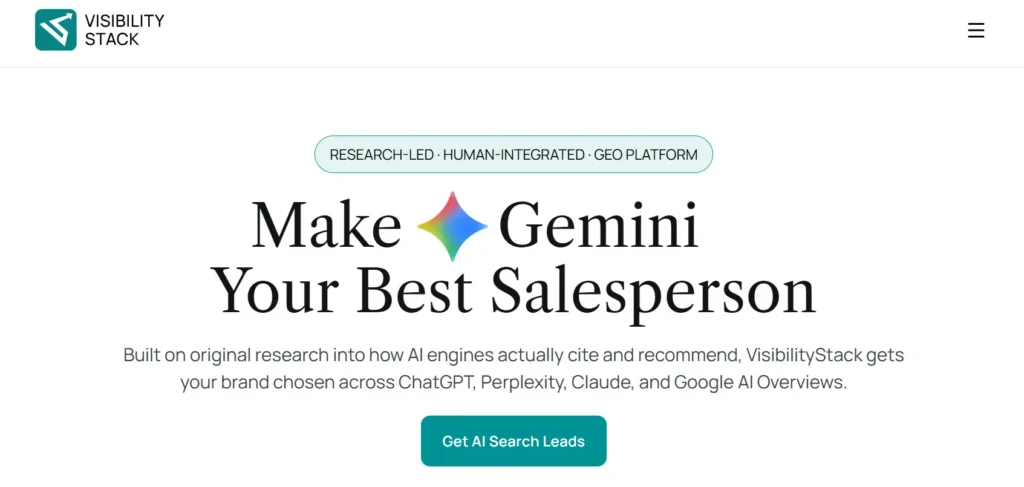
VisibilityStack is an AI SEO agency that runs a brand’s entire generative search program as a done-for-you service. Their team works across three outcomes: AI Search Accuracy, AI Search Visibility, and AI Search Leads: correcting how AI engines describe a brand, building the content and authority that earn citations, and turning that visibility into pipeline. The agency handles content creation, topical authority, and technical setup, then tracks how often the brand is cited across engines like ChatGPT, Perplexity, and Google, so clients get both the work and the proof. It suits B2B teams that want AI search managed end to end rather than run in-house.
First Page Sage
First Page Sage is a B2B agency known for thought-leadership content and search optimization. It has extended that work into AI search, helping brands earn visibility in AI-generated answers through authoritative, expert-led content. It suits companies that see in-depth thought leadership as their main growth engine.
iPullRank
iPullRank is a technical SEO consultancy that was an early and vocal voice on optimizing for AI and large language models. It is a strong fit for teams that want deep technical work, from structured data and site architecture to content designed for how generative engines read and retrieve information.
Omniscient Digital
Omniscient Digital is a B2B SaaS growth agency built around content-led SEO. Its editorial approach fits software companies that want thorough, well-structured content designed both to rank in traditional search and to be cited by AI systems.
RevenueZen
RevenueZen is a B2B agency that blends SEO, content, and demand generation. Its focus is turning organic and AI-driven visibility into pipeline, which suits revenue-minded marketing teams that want search work tied to business outcomes rather than rankings alone.
Siege Media
Siege Media is a content-focused agency known for editorial quality and organic growth. Its strength is producing well-researched, genuinely useful content, which gives AI engines strong, quotable material and helps a brand become a source those engines return to.
WebFX
WebFX is a large full-service digital marketing agency that now offers generative engine optimization alongside traditional SEO, paid media, and web work. It suits organizations that want AI search handled inside a broad, multi-channel program under one roof.
How to choose an AI SEO agency
The agencies above are strong for different reasons, so use this checklist to match one to your needs:
- Clear outcomes, not just activity. Ask what result each engagement is tied to, whether that is accuracy, visibility, or leads, rather than a set number of articles per month.
- Real measurement. Look for tracking of citations, share of voice inside AI answers, and referral traffic from AI tools, not only traditional keyword rankings.
- Content quality at scale. The team should produce accurate, well-structured content without a drop in quality as volume grows.
- Technical depth. Structured data, crawlability, and rendering should be part of the offer, because AI can only cite content it can reach and understand.
- Coverage across engines. Visibility in one tool is not enough. Ask which engines the agency tracks and optimizes for.
- Transparent pricing. You should be able to see what each tier includes and what it costs before you commit.
- Honest claims. Be cautious of anyone promising guaranteed rankings or citations. AI systems change often, and no one controls their output.
Run a quick self-check first
Before you contact any agency, spend ten minutes on a simple audit. Ask ChatGPT or Perplexity a few questions a customer might ask about your category, and note three things: whether your brand appears, whether the facts are correct, and which sources get cited. That quick check shows how much work is ahead and helps you ask each agency the right questions.
Frequently asked questions
Is AI SEO the same as GEO?
They describe the same idea. GEO, or Generative Engine Optimization, is the more technical term for optimizing content so generative AI systems cite it. AI SEO is the plain-language version many teams use.
Do I still need traditional SEO?
Yes. Clean site structure, fast pages, quality content, and good links still help. AI SEO builds on those foundations rather than replacing them.
How soon will I see results?
It varies by brand, competition, and starting point. Because AI systems change often, treat AI SEO as an ongoing program rather than a one-time project, and judge it on citation and visibility trends over time.
Final thoughts
The AI search field is young, and the tactics will keep changing. But the core idea is stable: help AI systems understand your brand, trust your content, and cite it when it matters. Whether you build these skills in-house or hire one of the agencies above, the sooner you check how AI describes you, the sooner you can improve it.