
How Tarlton Technologies is rebuilding towing software, roadside assistance, and real-time dispatch as a single connected network.
A Tarlton Technologies perspective, based on publicly described capabilities.
A vehicle stops in a live lane of an interstate at 2 a.m. The driver can’t pinpoint the location. The nearest tow truck doesn’t have the right equipment. The right truck is forty minutes out and already on another call. Cell service is one flickering bar that will drop the moment anyone needs to confirm anything.
Every minute spent sorting that out is another minute someone is standing on the shoulder of a highway in the dark.
To a motorist, it’s an emergency. To a towing operator, it’s a dispatch problem. To a software engineer, it’s one of the harder real-time systems problems in plain sight: geospatial matching under shifting constraints, a distributed state machine where half the nodes are moving, unreliable connectivity at the exact worst moment, and multiple parties who each need a different view of the same event.
It has every property engineers love to argue about at conferences. And for a hundred years it’s been running on phone calls and human memory.
That is the problem Road Rescue Network — the flagship platform from Tarlton Technologies — is built around: connecting the customer who needs help, the operator equipped to provide it, and the business processes that carry a job from the first request to the final invoice.
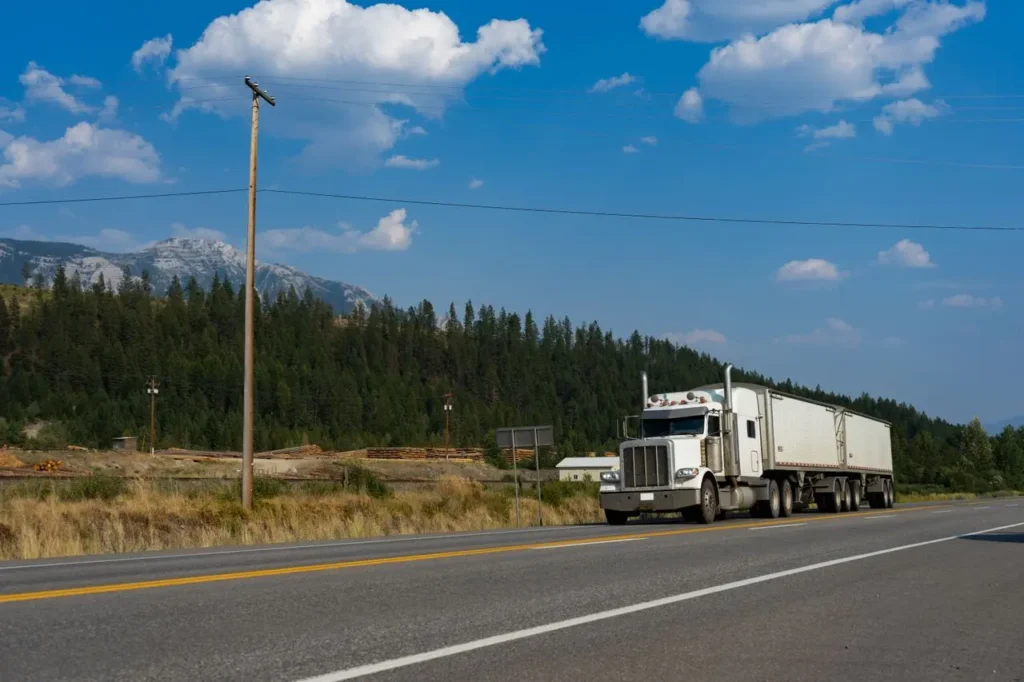
The team didn’t come from an incubator. They came from the tow yard.
This is the detail that explains the architecture, so it’s worth stating up front: the people behind Road Rescue Network didn’t start in a tech accelerator. They came out of the towing industry itself — decades in it — and then spent another twenty-seven years in full-stack development. It shows in the decisions.
Because anyone who has actually worked a towing operation knows the uncomfortable truth about how it runs. The dispatcher is the system.
The dispatcher knows which driver has a flatbed and which has a wheel-lift. Which truck can handle a particular recovery. Who’s reliable overnight. Which fleet customer needs special instructions. Which job needs one more phone call before anyone leaves the yard.
That knowledge keeps the business alive. It’s also almost never written down. It lives in one person’s head — implicit, unversioned, unbacked up. There’s no source of truth. There’s a guy. And when that guy quits, the company loses a database it never knew it had.
The engineering challenge in towing software isn’t capturing that information. It’s making it available to the right person at the exact moment it becomes useful — so a customer record informs the next request, an equipment detail informs the dispatch decision, and a change in availability changes the next assignment. The value was never in storing the data. It’s in connecting the data to the work.
Towing isn’t a truck’s business. It’s a coordination business.
This is the reframe that changes everything, and it’s the part developers tend to feel in their teeth.
Everyone in the industry assumes the asset is the truck. Buy trucks, hire drivers, insure the fleet, chase the calls. That’s a capital business with a hard ceiling — every dollar of growth costs steel, diesel, and liability.
But the truck isn’t the hard part. The matching is the hard part. Getting the right capability to the right place at the right moment is the thing no amount of steel solves. An available rollback can’t handle every heavy-duty recovery. A nearby operator may lack the equipment a specific vehicle needs. A capable technician may already be committed to another customer. Distance alone can’t resolve any of it.
Which means the real asset was never the fleet. It was the network, and the software that coordinates it. Tarlton Technologies treats roadside assistance as exactly that: a real-time network coordination problem, connecting customers who need help with operators who provide towing, recovery, mobile repair, and other roadside services. Get the coordination right, and you’re no longer capped by how many trucks you can afford. You’re bounded only by how well the system orchestrates the trucks that already exist.
Matching a request means understanding the job
A driver searching “towing near me” wants one thing: who can help, right now.
But before towing dispatch software can give a useful answer, it needs context. What vehicle? Where, precisely? What happened? What equipment is required? Where does the vehicle need to go? A search for a “towing company near me” might start with proximity, but a successful assignment depends on compatibility and availability — and those can change while the request is still being processed. An operator accepts another job. A customer adds new information. A reported jumpstart turns out to be a full tow.
Road Rescue Network’s service workflow describes matching requests by service type, vehicle compatibility, and current availability, followed by operator acceptance or reassignment. “Nearest available” is the naive answer — the one that gets someone stranded longer. The real query is a constraint-satisfaction problem resolved fast enough to feel instant to a frightened person on a shoulder. The nearest truck is often the wrong truck.
The hard engineering starts when the plan breaks
A routine job follows a clean sequence: request, match, accept, travel, arrive, complete, invoice.
The real work is everything that breaks that sequence.
An operator declines. An assignment goes unanswered. A destination changes mid-tow. The equipment requirement turns out to be different than reported. A customer needs to approve a revised estimate. Each change alters the next action — and the set of people who need to know about it.
That makes towing management software fundamentally a state-management problem. The system has to hold an unambiguous answer to a few questions at all times: Who owns this assignment? Has it been accepted? What just changed? What happens next?
Reassignment is the clean example. Sending the request to another operator is only part of it. The previous assignment has to be resolved, the current status has to stay clear, and the customer has to get information that reflects the new reality. Skip that coordination and automation just spreads conflicting information faster than a human ever could. A dependable workflow preserves the full history while keeping the current state unmistakable — and the discipline to design for the decline first, not the happy path, is the difference between a real system and a demo.
Connectivity isn’t a feature. It’s the operating environment.
Roadside operators work wherever vehicles stop — rural highways, parking structures, underpasses, dead zones. The connection that works when a job arrives can vanish before the driver reaches the scene. That, by definition, is where the most important node in the system goes dark: the driver is headed toward the one place with no coverage.
So offline operation isn’t something bolted on later. It’s the premise. A temporary loss of signal can’t mean losing access to essential job information, and updates made during an outage — notes, photos, status changes — have to synchronize cleanly when service returns, without duplicating actions or overwriting newer data. Road Rescue Network’s technology overview describes exactly this: offline operation with synchronization when connectivity comes back. If the software only works when everyone has five bars, it isn’t roadside software.
One breakdown, several views of the same event
A single service request can involve a motorist, a fleet manager, a dispatcher, and a rescuer — and some incidents pull in law enforcement or other responders as well. Each has different responsibilities and needs a different slice of the same event.
The customer needs arrival information. The rescuer needs vehicle, location, and service details. Dispatch needs to know whether the assignment is progressing. The fleet manager needs a record of what happened to the vehicle and what it cost. Those views have to stay connected without exposing information no one should see.
So the platform isn’t one app — it’s many doors into one system. Road Rescue Network’s platform model brings operator tools, fleet access, a service directory, and additional access points into a shared environment, with some capabilities live today and others still in active development. The purpose is continuity: information should follow the job as responsibility moves between people. A customer should never have to re-explain the entire breakdown because a new person picked up the conversation.
A tow ends. The customer relationship doesn’t.
Dispatch is urgent. Customer history is what’s still valuable after the truck leaves.
A fleet that calls tonight calls again next month, and whoever handles that next request should be able to pull the previous vehicle details, photographs, service notes, and invoice in seconds — attached to that customer. Otherwise, the business rebuilds its understanding of the same account on every call, which is just the dispatcher’s memory problem again, with extra steps.
The towing software from Road Rescue Network is built around that record. It combines customer relationship management with dispatch, directory placement, and bidding, with published capabilities including customer and invoice histories, mobile job acceptance, and live tracking. Business management and customer acquisition are usually two separate systems with a human wired between them; placing directory visibility and bidding alongside the operational tools lets operators evaluate opportunities in their service area while managing records and assignments in the same place — and, importantly, measure what actually happens after an inquiry arrives. A busy phone isn’t the goal. Work the operator can perform profitably is.
The part that sounds like fiction
Here’s where it gets genuinely unusual, stated plainly because it’s the truest thing in this article.
Tarlton Technologies got tired of the assumption that scaling a company means scaling a headcount — more calls, more office staff, more managers, more floors of people doing coordination. That’s the same ceiling as the trucks, just wearing a headset.
So the company built the operation itself as software. The organization that runs the network is structured like a real company — floors, offices, roles, ownership — except a large share of the operational workforce is AI. These “WebWorkers” handle defined tasks against the same business records and workflows a human would: intake, verification, matching support, follow-up. Not a chatbot bolted onto a homepage — digital workers with scoped permissions, a defined job, a record of their actions, and a clear point at which they hand an exception to a person. Some of those roles are operating now; others are still being built.
The ambition is an operating company where the org chart is partly code — where software performs the repeatable coordination and a small human team owns the exceptions and the judgment calls that shouldn’t be automated. Not zero people. The right people, doing the work that actually needs a human, instead of a call center doing the work that never should have.
A technology problem with real-world stakes
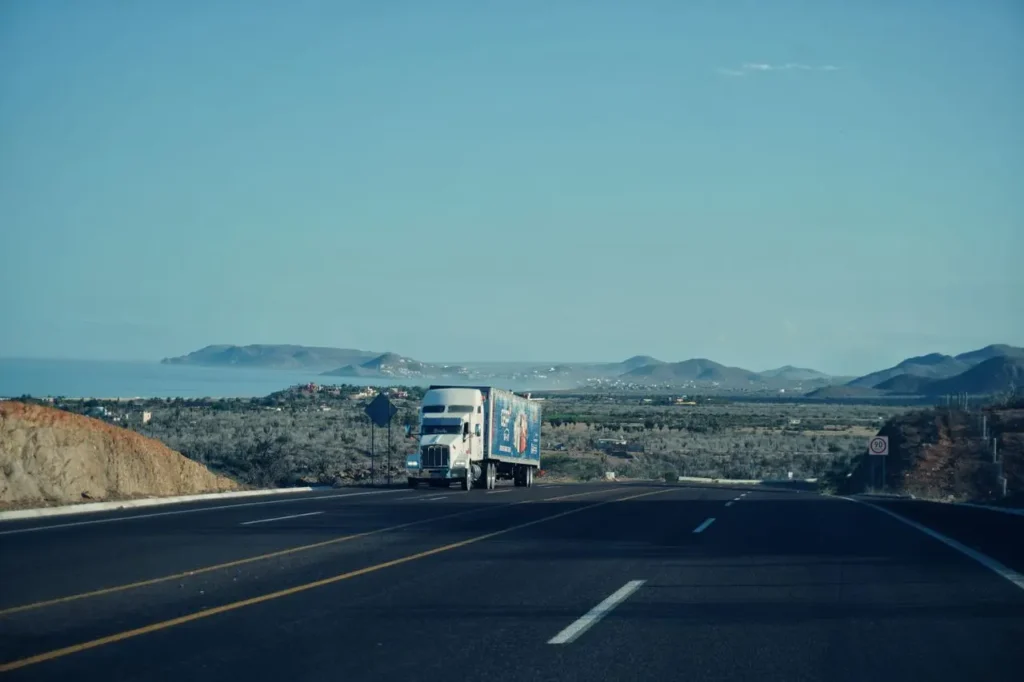
Roadside assistance quietly contains most of the conditions that make software hard to build: incomplete information, moving participants, changing constraints, unreliable connections. And the consequences don’t stay on the screen. A poorly matched assignment wastes travel time. An unclear status triggers duplicate calls. Missing documentation complicates billing. A disconnected workflow leaves a customer waiting on a shoulder with no idea when help arrives.
Tarlton Technologies is building around those concrete problems, connecting towing and recovery services with the software that organizes the work. The platform is still developing. The task, though, is refreshingly concrete.
Somewhere, right now, a vehicle has stopped. Someone needs help. An operator has the equipment and the ability to provide it.
The whole job is to bring those three together — and keep every piece of the job connected until the work is done. It turns out that’s one of the most interesting systems problems nobody was working on. Which is exactly why it was worth building.