
There are many metrics to check in your marketing campaigns. One of the most important types is engagement metrics. Click-through rate (CTR) also falls into this category. It shows how often people click on your ads, links, emails, or other content.
CTR is used across almost every digital marketing channel. This makes it an important metric for understanding campaign performance and user engagement.
What Is Click-Through Rate?
CTR shows the percentage of people who clicked on a link, ad, button, or another clickable element after seeing it.
The click-through rate formula is pretty simple:
CTR = (Number of clicks ÷ Number of impressions) × 100
Let’s check this formula with a real example for a better understanding. Imagine your paid ad gets 1,000 impressions and 30 clicks. Your CTR will be 30 divided by 1,000 and multiplied by 100. As a result, you will get 3%.
Keep in mind that, depending on the channel, the formula can change a little. This mostly applies to email campaigns. You can’t check how many users actually saw your email, but you can see how many emails were delivered. So, in this case, the formula will be:
CTR = (Number of clicks ÷ Number of delivered emails) × 100
Why Is Click-Through Rate Important?
You can have thousands of impressions, and that could make you think that your campaign is working really well. Of course, if your goal is to increase brand awareness, it is. But if you aim for conversions or want to increase the number of potential customers, this metric is not as important as CTR.
A good CTR indicates that people not only saw your message, but that it actually made them want to learn more about your brand.
If your ultimate goal in a campaign is conversions and your CTR is low, something is wrong and needs to be changed.
What Is the Average CTR in Digital Marketing?
An average CTR primarily depends on the channel and the type of ad you are running. For example, for display ads, the average CTR is 0.42%. But for paid Google Ads, the average is 3.52%. For email campaigns, the average is 2.45%.
If we talk about organic search, the situation is different. The average CTR varies greatly depending on the position in Google search results. For example, for the first position, the average is 27.5%, while for the 10th position, it is 2.42%.
Of course, if you have just started, your CTR may not be that high. That’s okay. The most important thing is to look for patterns and see what needs improvement and which campaigns work better. If your CTR increases over time, you are on the right track.
What Can You Learn From Your CTR?
CTR can help you:
- Understand how engaging your content is.
- Compare different ads, emails, or posts.
- Test headlines, copy, visuals, and CTAs.
- Identify campaigns that need improvement.
- See whether your audience targeting matches your message.
Still, CTR shouldn’t be viewed on its own. Purchases, sign-ups, downloads, etc. are just as important. You should look at all these metrics together and watch for patterns.
Which Channels to Check?
CTR in digital marketing can be used across many channels. However, the way you look at it can be a little different depending on where your content appears. If you run a multichannel marketing campaign, it is best to check CTR across all the platforms you use.
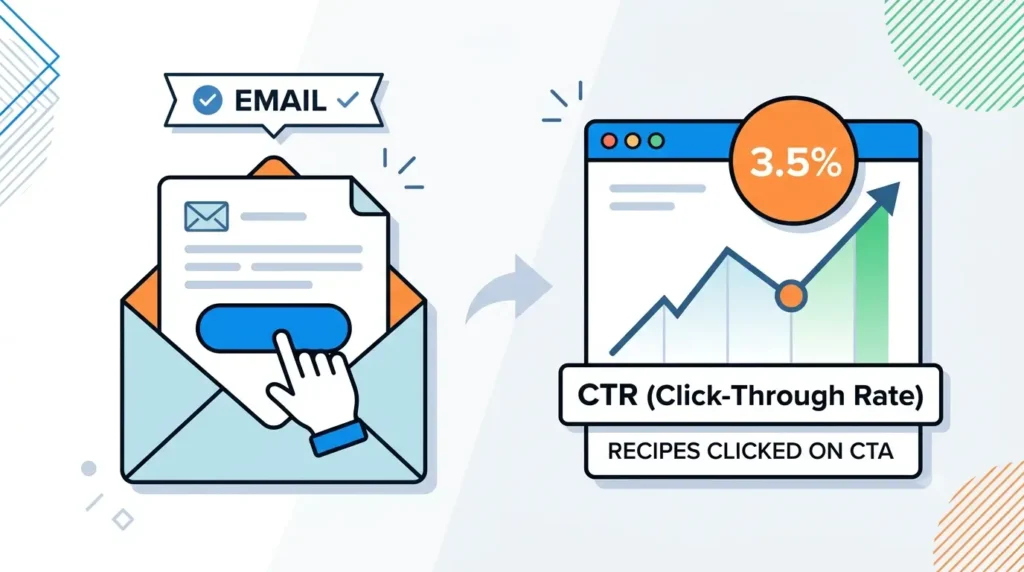
In email marketing campaigns, CTR shows how many recipients clicked on a link or CTA (call to action) in your email. Note that it does not show how many people clicked on the email itself, so don’t confuse the two.
In this case, CTR primarily tells you whether your email content was interesting enough to make people take the next step.
Social Media Platforms
In social media marketing campaigns, your goal may be to lead users directly to your website. In this case, CTR can show how many people clicked on a link in your post, story, or other content.
This can help you see whether your social media content is actually driving traffic to your website.
Paid Ads
When it comes to online advertising through paid ads, CTR is also one of the main metrics to check. It can help you compare different ads and see which ones attract more clicks.
For example, if one ad gets a much higher CTR than another, you can look at what makes it different and use this information when creating new ads. You can also use this data to build retargeting campaigns for people who clicked on your ads.
Display Ads
For display advertising, be ready to see lower CTR numbers. That’s absolutely okay for this type of campaign.
Display ads are often used to increase brand visibility and reach a wider audience, rather than only drive clicks. In this case, impressions and reach can play a more important role than CTR.
What Affects Click-Through Rate?
CTR can change because of many different factors and circumstances.
Some of the biggest ones include:
- Target audience: If your ad reaches the wrong people, it’s logical that they won’t be interested in your offer and won’t click on it.
- Relevance: Your ad should not only reach the right people but also match their interests, needs, or search intent. The more relevant your message is, the more likely people are to click.
- Ad copy: How you write and format your ad also matters. Even changing a few words in your headline or copy can affect your CTR.
- Visuals: Images, videos, and other visual elements can also influence whether people notice your ad and decide to click on it. So, try to make them clear and well-designed.
Where to Check Click-Through Rate?
To check your CTR and other metrics, you need a platform that collects and shows your campaign data. The exact setup can be different for each platform, but you usually only need to connect your website, ad account, or email tool once.
After that, the platform collects the data and shows your CTR in its reports. Here is a list of some of them:
Google Ads
In Google Ads, you can see the CTR for your paid ad campaigns directly in your account.
Google Search Console
If you want to check CTR from organic search, Search Console will be a great option.
Meta Ads Manager
If you run paid ads on Facebook or Instagram, you can find your CTR directly in Meta Ads Manager. You can also compare CTR with other campaign metrics to see which ads are getting more clicks and performing better.
Email marketing platforms
To measure CTR in email campaigns, you can use tools such as Mailchimp or HubSpot.
How to Improve Click-Through Rate?
If your CTR is lower than you expected, don’t rush to change everything at once. First, try to understand what may be causing it.
Then, run A/B tests on different elements of your campaign. This can help you see what actually works for your audience. Here are a few things you can try:
1. Improve your headlines
Your headline should quickly tell users what they can expect after clicking. Try to keep it short and easy to read, especially for mobile users. A long headline may be cut off on smaller screens.
2. Use a clear CTA
Your CTA should make it obvious what users can do next. For example, phrases such as “Check prices” or “Download our guide” tell people exactly what action they can take to learn more about what you are offering.
3. Match your content to user intent
Even a great ad can bring poor results if it reaches the wrong people. Make sure your message matches what your audience is actually looking for and that the offer is relevant to their needs.
4. Make your offer clear
People should quickly understand what they will get after clicking and why it is worth their time. If the benefit is unclear, they may simply move on without clicking.
5. Test different visuals
Images, videos, layouts, and other creative elements can affect whether people notice your content and decide to click. Try different versions and see which ones get better results.
6. Personalize your content
If you are targeting a specific niche of consumers or have a clear buyer persona in mind, personalize your message as much as possible. The more relevant your content feels to your audience, the more likely they are to pay attention and click.
7. Keep an eye on your results
After making changes, give your campaign enough time to collect data. Then compare the results with your previous version and see whether your CTR has actually improved.
Remember to look at other important marketing KPIs as well, such as conversion rate. This helps you make sure that the extra clicks are actually bringing value.
Final Thoughts
Click-through rate is one of those digital marketing metrics you will see almost everywhere. It tells you what percentage of people clicked after seeing your content, whether it was an email, social media post, search result, or ad.
But a good CTR isn’t just about getting the highest percentage possible. Context matters.
Compare similar campaigns, look at your previous results, and always connect CTR to what happens after the click. After all, clicks are only one step. What users do next is what can turn those clicks into actual results.