
Social media has transformed the way people communicate, learn, work, and share information. Platforms such as Facebook, Instagram, LinkedIn, X (formerly Twitter), and YouTube have become an integral part of daily life, enabling users to connect with friends, family, businesses, and communities across the globe. Whether it is staying updated with current events, promoting a business, or simply sharing personal experiences, social media plays a significant role in modern society.
The popularity of social media continues to grow at an unprecedented rate. Billions of people worldwide actively use social networking platforms every day, spending hours consuming content, engaging with others, and accessing information. The widespread adoption of smartphones and internet connectivity has made social media more accessible than ever before, further increasing its influence on individuals and communities.
Despite its many advantages, social media remains a topic of debate. Some view it as a powerful tool that promotes communication, education, business growth, and social awareness. Others argue that it contributes to issues such as addiction, cyberbullying, misinformation, privacy concerns, and mental health challenges. This ongoing discussion raises an important question: Is social media boon or bane?
In this article, we will explore both sides of the argument by examining the benefits and drawbacks of social media. We will also discuss its impact on students, businesses, and society as a whole, helping readers develop a balanced understanding of whether social media should be considered a boon, a bane, or a combination of both.
What Is Social Media?
Social media refers to digital platforms and applications that allow users to create, share, and interact with content online. These platforms enable people to communicate with others, exchange ideas, build communities, and stay informed about current events from virtually anywhere in the world. Social media has become one of the most influential forms of communication, shaping how individuals connect, businesses market their products, and organizations engage with audiences.
Definition of Social Media
Social media can be defined as a collection of internet-based platforms that facilitate user-generated content, networking, and real-time communication. Unlike traditional media, where information flows in one direction, social media allows users to actively participate by posting content, commenting, sharing, and interacting with others.
The primary purpose of social media is to foster communication and engagement among users. Whether for personal, educational, professional, or business purposes, social media provides a space where information can be shared instantly with a global audience.
Popular Social Media Platforms
Numerous social media platforms serve different purposes and audiences. Some of the most widely used platforms include:
1. Facebook
Facebook is one of the largest social networking platforms in the world. It allows users to connect with friends and family, join groups, share updates, post photos and videos, and follow businesses or public figures.
2. Instagram
Instagram is a visual-focused platform that enables users to share photos, videos, Stories, and Reels. It is especially popular among content creators, influencers, and brands seeking to engage audiences through visual content.
3. X (Twitter)
X, formerly known as Twitter, is a microblogging platform that allows users to share short posts, opinions, news updates, and trending discussions in real time. It is widely used for breaking news and public conversations.
4. LinkedIn
LinkedIn is a professional networking platform designed for career development, job searching, business networking, and industry discussions. Professionals and organizations use LinkedIn to build their online presence and establish professional connections.
5. YouTube
YouTube is the world’s largest video-sharing platform, allowing users to upload, watch, and interact with video content. It serves as a source of entertainment, education, tutorials, news, and marketing content.
6. TikTok
TikTok is a short-form video platform known for its creative and engaging content. Users can create videos featuring music, effects, challenges, and educational material, making it particularly popular among younger audiences.
How Social Media Has Evolved Over Time
Social media has undergone significant transformation since its early days. Initial platforms primarily focused on basic communication and personal networking. Over time, advancements in technology, mobile devices, and internet accessibility have expanded the capabilities of social media platforms.
Today, social media integrates features such as live streaming, e-commerce, artificial intelligence-driven recommendations, virtual communities, and advanced advertising tools. Businesses use social media for marketing and customer engagement, while individuals rely on it for communication, entertainment, learning, and professional growth.
As social media continues to evolve, its influence on society grows stronger, which is why the debate over whether social media is a boon or bane remains highly relevant in today’s digital world.
Why Social Media Is Considered a Boon
While the debate surrounding social media boon or bane continues, there is no denying that social media has brought numerous benefits to individuals, businesses, and society. It has transformed communication, expanded access to information, and created new opportunities for learning and economic growth. When used responsibly, social media can be a powerful tool that enhances both personal and professional lives.
1. Instant Communication Across the World
One of the greatest advantages of social media is its ability to connect people instantly, regardless of geographical location. In the past, communicating with someone in another country could take days or even weeks. Today, social media platforms allow users to send messages, make video calls, and share updates in real time.
a. Connecting Families and Friends
Social media helps families and friends stay connected, even when they live far apart. Through messaging apps, video chats, and social networking platforms, people can maintain relationships, celebrate milestones, and share important moments with loved ones. This has become especially valuable for individuals working, studying, or living abroad.
b. Real-Time Communication
Another significant benefit is the ability to communicate instantly. News, updates, and personal messages can be shared within seconds. Whether it is coordinating a work project, discussing current events, or staying informed during emergencies, social media enables fast and efficient communication.
2. Access to Information and Education
Social media has revolutionized the way people access knowledge and educational resources. Instead of relying solely on traditional learning methods, users can now find valuable information online at any time.
a. Online Learning Opportunities
Students and professionals can access courses, webinars, virtual workshops, and educational communities through social media platforms. These opportunities allow individuals to learn new skills, improve their knowledge, and stay updated with industry trends without geographical limitations.
b. Educational Content and Tutorials
Many educators, experts, and organizations use social media to share tutorials, guides, and educational videos. Platforms such as YouTube and LinkedIn provide content on topics ranging from academic subjects and technology to business and personal development, making learning more accessible and engaging. As visual learning continues to evolve, educators are also exploring new ways to make their existing resources more engaging. Tools like invideo agent can help creators turn images into videos, allowing them to transform diagrams, illustrations, and presentation materials into dynamic video content that is easier for learners to consume and share across social platforms.
c. Knowledge Sharing Communities
Social media has created communities where people can exchange ideas, ask questions, and share expertise. Discussion groups, professional networks, and online forums allow users to learn from others’ experiences and gain insights from experts around the world.
3. Business Growth and Marketing Opportunities
Social media has become an essential tool for businesses of all sizes. It provides cost-effective ways to reach target audiences, build brand recognition, and engage with customers.
a. Digital Marketing Benefits
Businesses can promote products and services through targeted advertising, content marketing, and social media campaigns. Compared to traditional advertising methods, social media marketing often delivers broader reach and measurable results at a lower cost.
b. Brand Awareness
Social media helps companies establish and strengthen their brand presence. By consistently sharing valuable content and interacting with followers, businesses can increase visibility and build trust among potential customers.
c. Customer Engagement
One of the unique advantages of social media is direct interaction with customers. Businesses can respond to inquiries, address concerns, gather feedback, and build stronger relationships with their audience. This level of engagement helps improve customer satisfaction and loyalty.
d. Opportunities for Small Businesses
Social media has created a level playing field for small businesses and startups. Even with limited marketing budgets, entrepreneurs can reach large audiences, showcase their products, and compete with larger brands. Many small businesses have achieved significant growth through strategic use of social media platforms.
Overall, these advantages demonstrate why many people view social media as a boon. Its ability to connect individuals, provide educational resources, and support business growth has made it an indispensable part of modern life.
4. Career Development and Networking
Social media has become an important tool for career growth and professional development. Beyond personal communication, many platforms provide opportunities for individuals to connect with industry professionals, discover job openings, and build their professional reputation. As a result, social media plays a significant role in helping people advance their careers.
a. Professional Networking
Platforms such as LinkedIn have transformed the way professionals network. Users can connect with colleagues, industry leaders, recruiters, and potential employers from around the world. These connections can lead to mentorship opportunities, collaborations, business partnerships, and valuable career advice.
Professional networking through social media also allows individuals to participate in industry discussions, join professional groups, and stay informed about trends within their field. This continuous engagement helps users expand their knowledge and strengthen their professional relationships.
b. Job Opportunities
Many organizations use social media platforms to advertise job openings and recruit candidates. Job seekers can explore vacancies, connect directly with hiring managers, and learn more about prospective employers before applying.
Social media also provides access to remote work opportunities and freelance projects that may not be advertised through traditional channels. This increased accessibility makes it easier for individuals to find career opportunities that match their skills and interests.
c. Personal Branding
In today’s digital world, personal branding has become increasingly important. Social media enables individuals to showcase their expertise, achievements, and professional experiences to a wider audience.
By sharing valuable insights, industry knowledge, and accomplishments, professionals can establish themselves as credible voices in their field. A strong personal brand can attract career opportunities, increase visibility among recruiters, and enhance professional credibility.
5. Social Awareness and Community Building
Another reason many people view social media as a boon is its ability to bring communities together and raise awareness about important issues. Social platforms allow individuals and organizations to communicate messages quickly, mobilize support, and encourage public participation in social causes.
a. Social Movements
Social media has played a significant role in supporting social movements around the world. Activists, nonprofit organizations, and community leaders use these platforms to spread information, organize events, and encourage discussions on important social issues.
By providing a space for diverse voices to be heard, social media empowers individuals to participate in conversations that can influence public opinion and inspire positive change.
b. Fundraising Campaigns
Fundraising has become more accessible through social media. Individuals, charities, and nonprofit organizations can reach large audiences and raise funds for causes such as disaster relief, medical treatment, education, and community development projects.
The ability to share campaigns quickly and encourage donations from supporters worldwide has made social media a powerful tool for charitable initiatives.
c. Public Awareness Initiatives
Governments, healthcare organizations, educational institutions, and advocacy groups frequently use social media to spread awareness about important topics. Campaigns related to public health, environmental protection, road safety, and social welfare can reach millions of people within a short period.
This broad reach helps educate the public and encourages individuals to take informed actions that benefit society.
6. Emergency Communication and Disaster Response
Social media has become an essential communication channel during emergencies and natural disasters. Its speed and accessibility make it an effective tool for sharing critical information when timely communication is necessary.
a. Quick Dissemination of Important Information
During emergencies such as floods, earthquakes, hurricanes, or public health crises, social media allows authorities and organizations to distribute updates instantly. People can receive warnings, safety instructions, and real-time information that may help protect lives and reduce risks.
The rapid spread of information ensures that communities remain informed and can respond appropriately to evolving situations.
b. Crisis Management
Organizations and government agencies often rely on social media during crisis situations to communicate directly with the public. They can address concerns, provide official updates, correct misinformation, and coordinate response efforts efficiently.
Individuals also use social media to seek assistance, report incidents, and share information about affected areas. This two-way communication enhances coordination and supports faster disaster response efforts.
The benefits of career development, community engagement, and emergency communication further strengthen the argument that social media can be a powerful force for positive change. When used responsibly, it not only connects people but also creates opportunities, promotes awareness, and supports society during critical situations.
Why Social Media Is Considered a Bane
Although social media offers numerous benefits, it also presents several challenges that have raised concerns among individuals, educators, healthcare professionals, and policymakers. Excessive usage, mental health issues, and the rapid spread of misinformation have led many people to argue that social media can have a negative impact on society. These concerns form the basis of the argument that social media is a bane rather than a boon.
1. Social Media Addiction
One of the most commonly discussed drawbacks of social media is addiction. Social media platforms are designed to encourage user engagement through notifications, likes, comments, and personalized content feeds. While these features enhance user experience, they can also lead to excessive usage and dependency.
a. Excessive Screen Time
Many people spend several hours each day scrolling through social media feeds, watching videos, and interacting with content. Excessive screen time can reduce the amount of time available for productive activities such as studying, working, exercising, or spending time with family and friends.
Prolonged use of digital devices may also contribute to physical issues such as eye strain, headaches, sleep disturbances, and poor posture. As a result, concerns about screen addiction continue to grow, particularly among teenagers and young adults.
b. Reduced Productivity
Frequent social media usage can become a major distraction in both academic and professional environments. Constant notifications and the temptation to check updates can interrupt concentration and reduce efficiency.
Students may find it difficult to focus on their studies, while employees may struggle to complete tasks on time. Even short interruptions can significantly impact productivity when they occur repeatedly throughout the day.
c. Dependency Issues
Over time, some users may develop a dependency on social media for entertainment, validation, or emotional support. They may feel compelled to check notifications constantly or experience discomfort when unable to access their favorite platforms.
This dependency can affect daily routines, interpersonal relationships, and overall well-being. In severe cases, excessive reliance on social media may interfere with real-world responsibilities and social interactions.
2. Mental Health Concerns
Mental health is another major factor in the debate over whether social media is a boon or bane. While social media can provide support networks and positive communities, excessive use has also been associated with various psychological challenges.
a. Anxiety and Depression
Research and public discussions have highlighted potential links between heavy social media usage and increased feelings of anxiety and depression. Constant exposure to negative news, online criticism, and unrealistic portrayals of success can contribute to emotional stress.
Users may feel pressure to maintain a perfect online image or seek approval through likes and comments, which can negatively affect mental well-being over time.
b. Fear of Missing Out (FOMO)
Fear of Missing Out, commonly known as FOMO, is a psychological phenomenon that has become increasingly associated with social media use. When individuals see others sharing vacations, achievements, social events, or lifestyle highlights, they may feel that they are missing important experiences.
This constant comparison can create feelings of dissatisfaction and anxiety, even when users are content with their own lives. As a result, social media can sometimes contribute to unnecessary stress and emotional discomfort.
c. Low Self-Esteem and Comparison Culture
Social media often showcases carefully curated content that highlights the best moments of people’s lives. While these posts may appear inspiring, they can also encourage unhealthy comparisons.
Users may compare their appearance, lifestyle, career progress, or personal achievements with those of others, leading to lower self-esteem and reduced self-confidence. Young users are particularly vulnerable to the effects of comparison culture, as they may struggle to distinguish between reality and the idealized images presented online.
3. Spread of Misinformation and Fake News
The speed at which information travels on social media is both a strength and a weakness. While important updates can reach millions of people quickly, false or misleading information can spread just as rapidly.
a. Viral Misinformation
Misinformation often gains traction because it is designed to attract attention and encourage sharing. Rumors, misleading headlines, manipulated images, and false claims can quickly become viral before their accuracy is verified.
This can create confusion and contribute to the spread of inaccurate information on important topics such as health, politics, finance, and public safety.
b. Impact on Public Opinion
Social media has a significant influence on how people form opinions and make decisions. When users are repeatedly exposed to misleading or biased content, it can shape their perceptions and affect their understanding of important issues.
In some cases, misinformation may contribute to social divisions, public panic, or distrust in credible institutions. The widespread influence of social media makes the consequences of false information particularly concerning.
c. Challenges in Fact-Checking
One of the biggest challenges associated with social media is verifying the accuracy of information. The sheer volume of content published every day makes it difficult for platforms and users to fact-check everything before it is shared.
Although many platforms have introduced measures to combat misinformation, false content can still circulate widely before corrections are issued. This highlights the importance of critical thinking and responsible content consumption among users.
These challenges demonstrate why many critics consider social media a bane. Issues such as addiction, mental health concerns, and misinformation show that while social media offers significant advantages, it can also create serious problems when used irresponsibly or without proper safeguards.
4. Privacy and Security Risks
As social media usage continues to increase, concerns about privacy and online security have become more significant. Many social media platforms collect large amounts of user data, including personal information, browsing habits, location details, and online activity. While this data helps platforms personalize user experiences, it can also create risks when not adequately protected.
a. Data Breaches
Data breaches occur when unauthorized individuals gain access to sensitive user information stored by social media platforms or related services. These breaches can expose personal details such as email addresses, phone numbers, passwords, and financial information.
When user data falls into the wrong hands, it can lead to privacy violations and increase the risk of cybercrime. Even major social media companies have experienced data breaches, highlighting the importance of strong security measures and responsible data management.
b. Identity Theft
Identity theft is another serious concern associated with social media. Cybercriminals can use publicly available information from social media profiles to impersonate individuals or gain unauthorized access to accounts.
Details such as birth dates, locations, family information, and contact details may be exploited to commit fraud or bypass security verification processes. This makes it essential for users to limit the amount of personal information they share online.
c. Online Scams
Social media platforms have become common targets for scammers seeking to deceive users. Fraudulent advertisements, fake giveaways, phishing messages, and impersonation accounts are frequently used to steal personal information or financial details.
Because scammers often disguise themselves as trusted individuals or organizations, users may find it difficult to identify fraudulent activities. As a result, online scams remain one of the major disadvantages of social media.
5. Cyberbullying and Online Harassment
The ability to communicate freely online has many benefits, but it can also be misused. Cyberbullying and online harassment have become significant issues across social media platforms, affecting users of all ages.
a. Effects on Teenagers and Adults
Teenagers are particularly vulnerable to cyberbullying because they spend a considerable amount of time online and are often influenced by peer interactions. Negative comments, public humiliation, exclusion from online groups, and harassment can have a lasting impact on young users.
However, cyberbullying is not limited to teenagers. Adults, public figures, professionals, and content creators may also experience online harassment, hate speech, trolling, and abusive behavior. In some cases, such experiences can affect both personal and professional lives.
b. Emotional and Psychological Consequences
The emotional effects of cyberbullying can be severe. Victims may experience stress, anxiety, fear, embarrassment, loneliness, and reduced self-confidence. Continuous exposure to online harassment can negatively affect mental health and overall well-being.
In extreme situations, cyberbullying may contribute to depression, social withdrawal, and other psychological challenges. This highlights the importance of creating safer online environments and promoting responsible digital behavior.
6. Negative Impact on Real-Life Relationships
While social media is designed to connect people, excessive reliance on digital communication can sometimes weaken real-world relationships. Many critics argue that social media encourages virtual interactions at the expense of meaningful face-to-face communication.
a. Reduced Face-to-Face Interaction
The convenience of messaging, commenting, and online conversations has reduced the need for in-person communication in many situations. Although digital communication allows people to stay connected, it cannot fully replace the depth and emotional connection of face-to-face interactions.
When individuals spend more time interacting through screens than engaging with people in their immediate environment, personal relationships may become less meaningful over time.
b. Social Isolation
Ironically, a platform designed to connect people can sometimes contribute to feelings of isolation. Users may have hundreds or even thousands of online connections yet still experience loneliness and a lack of genuine social support.
Excessive social media usage can discourage participation in real-world activities, hobbies, and community interactions. As a result, individuals may become increasingly detached from their physical surroundings and social circles.
The combination of privacy concerns, cyberbullying, and weakened personal relationships strengthens the argument that social media can have negative consequences. These challenges demonstrate that while social media offers valuable opportunities, responsible usage and awareness of potential risks are essential to minimizing its harmful effects.
Social Media Boon or Bane for Students?
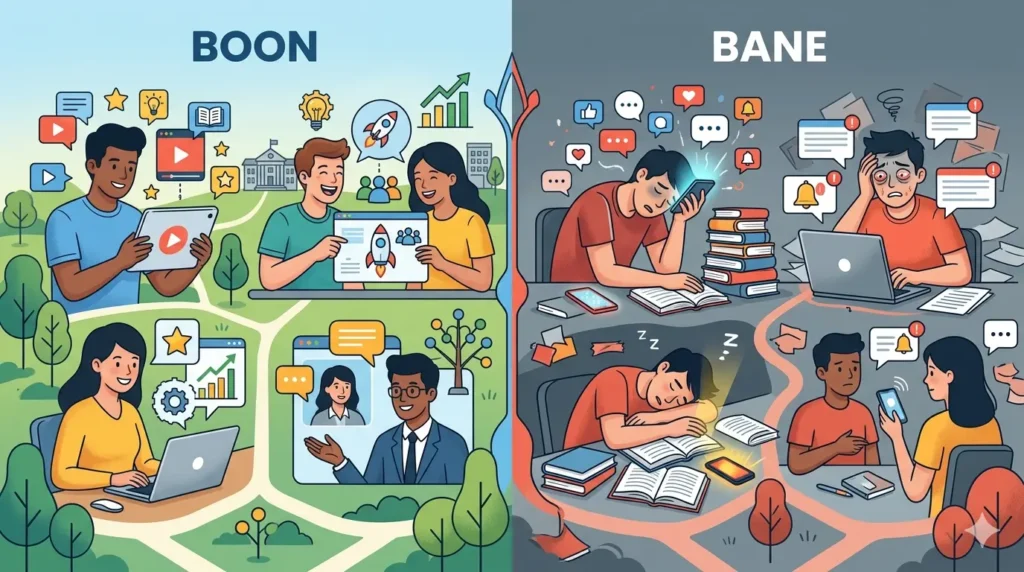
The question of whether social media is a boon or bane is particularly relevant for students. As one of the most active groups on social media platforms, students use these networks for communication, entertainment, education, and skill development. While social media offers numerous learning opportunities, excessive or irresponsible use can negatively affect academic performance and overall well-being. Therefore, its impact on students largely depends on how it is used.
Benefits for Students
When used effectively, social media can serve as a valuable educational and professional development tool. It provides access to information, encourages collaboration, and helps students acquire new skills that can benefit them both academically and professionally.
1. Educational Resources
One of the biggest advantages of social media for students is easy access to educational content. Platforms such as YouTube, LinkedIn, and educational communities provide tutorials, lectures, study materials, and expert insights on a wide range of subjects.
Students can learn at their own pace, explore topics beyond their curriculum, and access resources that may not be available in traditional classrooms. This accessibility has made learning more flexible and inclusive.
2. Collaboration and Communication
Social media facilitates communication among students, teachers, and educational institutions. Group discussions, study groups, and collaborative projects can be organized through various social networking platforms and messaging applications.
Students can share notes, exchange ideas, seek clarification on difficult topics, and work together on assignments regardless of their physical location. This enhanced communication promotes teamwork and improves learning experiences.
3. Skill Development
Social media can also contribute to personal and professional skill development. Students can learn digital literacy, communication skills, content creation, networking, and even technical skills through online courses and educational communities.
Many students use social media to showcase their talents, build portfolios, and connect with professionals in their desired industries. These opportunities can help prepare them for future careers and increase their competitiveness in the job market.
Drawbacks for Students
Despite its educational benefits, social media can also create challenges that affect students’ academic success and mental well-being. Excessive usage and poor time management are among the most common concerns.
1. Distractions During Study
Social media can be a major source of distraction during study sessions. Frequent notifications, messages, videos, and trending content often tempt students to check their devices, interrupting their focus and reducing study efficiency.
Even brief distractions can disrupt concentration and make it difficult to return to academic tasks, resulting in wasted time and lower productivity.
2. Reduced Concentration
Continuous exposure to short-form content and constant digital stimulation may impact students’ ability to concentrate for extended periods. Many students find it challenging to focus on reading, research, or classroom activities after spending significant time on social media platforms.
This reduced attention span can affect learning outcomes and make it harder to absorb complex information.
3. Academic Performance Concerns
Excessive social media usage may negatively influence academic performance when it replaces study time, sleep, or other productive activities. Students who spend long hours online may struggle to complete assignments on time, prepare effectively for examinations, or maintain consistent academic results.
Poor time management and social media dependency can create a cycle in which academic responsibilities are repeatedly postponed, leading to increased stress and lower achievement levels.
Tips for Healthy Social Media Usage
Students can enjoy the benefits of social media while minimizing its drawbacks by adopting responsible usage habits. Some practical strategies include:
- Set daily limits for social media usage.
- Avoid using social media during study sessions.
- Turn off unnecessary notifications to reduce distractions.
- Follow educational and informative accounts that support learning goals.
- Verify information before using it for academic purposes.
- Take regular breaks from screens to maintain physical and mental well-being.
- Prioritize real-life interactions, hobbies, and academic responsibilities.
- Use productivity tools and time-management techniques to stay focused.
Social Media Boon or Bane for Businesses?
For modern businesses, social media has evolved from a communication platform into a powerful marketing and customer engagement tool. Companies of all sizes use social media to promote products, build brand awareness, interact with customers, and generate sales. However, while social media creates significant growth opportunities, it also introduces challenges that businesses must carefully manage. As a result, whether social media is a boon or bane for businesses depends largely on how effectively it is utilized.
Benefits for Businesses
Social media offers several advantages that help businesses expand their reach, strengthen customer relationships, and improve overall marketing performance.
1. Cost-Effective Marketing
One of the most significant benefits of social media is its affordability compared to traditional advertising methods. Businesses can create profiles, share content, and engage with audiences at little or no cost.
Even paid advertising campaigns on social media platforms often require smaller budgets than television, radio, or print advertisements. This makes social media particularly valuable for startups and small businesses with limited marketing resources.
Additionally, businesses can target specific demographics based on age, location, interests, and online behavior, helping them maximize their marketing return on investment.
2. Customer Engagement
Social media enables businesses to interact directly with customers in real time. Through comments, messages, polls, and live sessions, companies can answer questions, resolve concerns, and gather feedback quickly.
This direct communication helps build trust and strengthens relationships with customers. Businesses that actively engage with their audience often create stronger brand loyalty and improve customer satisfaction.
Customer engagement also provides valuable insights into consumer preferences, allowing businesses to adapt their products, services, and marketing strategies accordingly.
3. Lead Generation
Social media platforms have become effective tools for generating leads and attracting potential customers. Businesses can use content marketing, advertisements, webinars, and promotional campaigns to capture the interest of their target audience.
Features such as contact forms, call-to-action buttons, and direct messaging make it easier for businesses to convert social media visitors into qualified leads. Many organizations use social media as a key component of their sales funnel and customer acquisition strategy.
4. Market Research
Social media provides businesses with access to large amounts of consumer data and feedback. Companies can monitor discussions, analyze customer behavior, track industry trends, and observe competitor activities.
This information helps businesses identify market demands, evaluate customer satisfaction, and make informed decisions. Social listening tools further enable organizations to understand public sentiment and respond proactively to changing market conditions.
Challenges for Businesses
Despite its advantages, social media also presents several challenges that can affect a company’s reputation, visibility, and long-term success.
1. Negative Reviews
One of the most common challenges businesses face on social media is dealing with negative reviews and public criticism. Dissatisfied customers can easily share their experiences online, where comments and complaints may quickly reach a large audience.
While constructive feedback can help businesses improve, unresolved complaints can damage customer trust and influence purchasing decisions. Companies must therefore respond professionally and promptly to customer concerns.
2. Reputation Management
A business’s online reputation can be significantly affected by social media activity. A single controversial post, customer complaint, or misunderstanding can generate negative publicity and harm brand perception.
Managing a positive online reputation requires continuous monitoring, effective communication, and transparency. Businesses must be prepared to address issues quickly and maintain consistent messaging across all social media platforms.
3. Algorithm Changes
Social media platforms frequently update their algorithms, affecting how content is displayed to users. These changes can reduce a business’s organic reach and make it more difficult to connect with followers without investing in paid promotions.
As a result, businesses often need to adjust their content strategies and marketing approaches to remain visible and competitive. Keeping up with platform updates can be time-consuming and challenging.
4. Increased Competition
The popularity of social media has created a highly competitive digital marketplace. Businesses across every industry compete for the attention of the same audience, making it difficult to stand out.
Companies must consistently create high-quality content, engage with customers, and innovate their marketing strategies to maintain visibility. The increasing volume of content published daily means that attracting and retaining audience attention requires significant effort and creativity.
Social Media Boon or Bane: A Comparison
The debate surrounding social media boon or bane exists because social media has both positive and negative impacts on society. While it has revolutionized communication, education, and business, it has also introduced challenges related to mental health, privacy, and misinformation. The table below highlights the key advantages and disadvantages of social media across different aspects of life.
| Aspect | Boon | Bane |
|---|---|---|
| Communication | Instant connectivity across the globe | Reduced face-to-face interaction and relationship quality |
| Education | Easy access to learning resources and online courses | Information overload and distractions from studies |
| Business | Cost-effective marketing and customer engagement opportunities | Reputation risks, negative reviews, and increased competition |
| Mental Health | Support groups and online communities that provide encouragement | Anxiety, depression, FOMO, and comparison culture |
| Information | Quick access to news, updates, and real-time events | Spread of fake news, misinformation, and unverified content |
| Privacy | Networking opportunities and professional connections | Data breaches, identity theft, and security concerns |
Understanding Both Sides
The comparison clearly shows that social media is neither entirely beneficial nor entirely harmful. Its impact depends on how individuals, businesses, and communities choose to use it.
For example, instant communication helps people stay connected with friends and family around the world, but excessive reliance on digital interaction may weaken personal relationships. Similarly, social media provides access to educational content and professional networking opportunities, yet it can also distract users from important responsibilities and expose them to misleading information.
Businesses benefit from affordable marketing and direct customer engagement, but they must also manage public criticism and maintain a positive online reputation. Likewise, while social media can create supportive communities and raise awareness about important causes, excessive use may contribute to stress, anxiety, and privacy concerns.
The Need for Balance
The comparison between the advantages and disadvantages of social media highlights the importance of balance. Responsible usage allows people to enjoy the benefits of communication, learning, and networking while minimizing risks such as addiction, misinformation, and security threats.
Rather than viewing social media as purely a boon or a bane, it is more accurate to see it as a powerful tool. Like any tool, its impact depends on how it is used. When approached thoughtfully and responsibly, social media can contribute positively to personal growth, education, business success, and social development while reducing its potential drawbacks.
How to Use Social Media Responsibly
The impact of social media largely depends on how it is used. While social media offers valuable opportunities for communication, learning, networking, and business growth, excessive or careless use can lead to various problems. By adopting responsible habits, users can maximize the benefits of social media while minimizing its risks.
Set Screen Time Limits
One of the most effective ways to use social media responsibly is to establish clear limits on daily usage. Spending excessive time on social networking platforms can reduce productivity, disrupt sleep patterns, and affect mental well-being.
Many smartphones and applications now offer screen time tracking features that help users monitor and manage their usage. Setting specific time limits can encourage a healthier balance between online and offline activities.
Verify Information Before Sharing
Social media enables information to spread rapidly, but not all content shared online is accurate. Before reposting articles, videos, or claims, users should verify information through reliable and trustworthy sources.
Taking a few moments to fact-check content can help prevent the spread of misinformation and fake news. Responsible sharing contributes to a more informed and trustworthy online environment.
Protect Personal Information
Protecting personal data is essential when using social media. Users should be cautious about sharing sensitive information such as phone numbers, home addresses, financial details, and personal identification documents.
Using strong passwords, enabling two-factor authentication, and regularly reviewing privacy settings can significantly improve account security. These precautions help reduce the risk of identity theft, hacking, and online fraud.
Follow Positive and Educational Content
The type of content users consume can significantly influence their online experience. Following educational channels, industry experts, motivational creators, and reputable organizations can make social media a valuable source of learning and inspiration.
Curating a positive feed also helps reduce exposure to harmful content, negativity, and unnecessary distractions, leading to a more productive and meaningful experience.
Take Regular Digital Breaks
Continuous exposure to social media can sometimes contribute to stress, anxiety, and information overload. Taking regular breaks from screens allows individuals to recharge mentally and focus on real-world activities.
Engaging in hobbies, exercising, spending time with family and friends, and participating in community activities can help maintain a healthy balance between digital and personal life. Even short breaks can improve focus, productivity, and overall well-being.
The Future of Social Media
Social media continues to evolve rapidly as technology advances and user expectations change. Emerging innovations are reshaping how people interact online, while governments and organizations are working to address concerns related to privacy, misinformation, and digital well-being.
AI and Personalization
Artificial intelligence (AI) is expected to play an increasingly important role in the future of social media. AI-powered algorithms already personalize content recommendations, advertisements, and user experiences based on individual preferences and behavior.
As technology improves, social media platforms may deliver even more relevant and customized content. While personalization can enhance user engagement, it also raises important questions about privacy, transparency, and data usage.
Stronger Privacy Regulations
Growing concerns about data security and user privacy have prompted governments worldwide to introduce stricter regulations. Future social media platforms are likely to operate under stronger privacy frameworks designed to protect personal information and increase transparency.
Companies may be required to provide clearer explanations of how user data is collected, stored, and used. These changes could help build greater trust between users and social media platforms.
Rise of New Platforms
The social media landscape is constantly changing, with new platforms emerging to meet evolving user needs. Future platforms may focus on niche communities, enhanced privacy features, immersive experiences, or innovative content formats.
As user preferences shift, businesses and individuals will need to adapt to new technologies and communication channels to remain relevant and engaged.
Greater Focus on Digital Well-Being
Awareness of the potential negative effects of excessive social media use has increased significantly in recent years. As a result, many platforms are introducing features designed to promote healthier digital habits.
Future developments may include improved screen time management tools, stronger content moderation systems, enhanced parental controls, and features that encourage mindful usage. These initiatives aim to create a safer and more balanced online environment for users of all ages.
Looking Ahead
The future of social media will likely be shaped by a combination of technological innovation, regulatory changes, and growing awareness of digital well-being. While new opportunities will continue to emerge, users, businesses, and policymakers must work together to ensure that social media remains a positive force for communication, education, and social connection.
By embracing responsible usage practices and adapting to future developments, individuals can continue to benefit from social media while minimizing its potential drawbacks.
Is Social Media a Boon or Bane? The Final Verdict
After examining both the advantages and disadvantages, it becomes clear that social media is neither entirely a boon nor entirely a bane. Like any powerful tool, its impact depends largely on how it is used. Social media has transformed communication, education, business, and information sharing, creating opportunities that were unimaginable just a few decades ago. At the same time, it has introduced challenges such as addiction, misinformation, privacy concerns, and mental health issues.
For individuals, social media can be a valuable platform for learning, networking, staying informed, and maintaining relationships. Students can access educational resources, professionals can build their careers, and communities can come together to support important causes. However, excessive use, unhealthy comparisons, and exposure to misleading information can diminish these benefits and negatively affect well-being.
For businesses and organizations, social media offers cost-effective marketing, customer engagement, and growth opportunities. Yet, it also requires careful management of reputation, privacy, and online communication. Organizations that use social media strategically and responsibly are more likely to experience positive outcomes.
The key factor that determines whether social media becomes a boon or a bane is responsible usage. Users must learn to balance their online activities with real-life responsibilities, verify information before sharing it, protect their privacy, and maintain healthy digital habits. Likewise, social media platforms and policymakers have a role to play in creating safer and more transparent online environments.
Ultimately, social media is a reflection of how society chooses to use it. When used thoughtfully and responsibly, it can educate, connect, empower, and inspire people around the world. When misused, it can contribute to misinformation, stress, and social challenges. Therefore, rather than asking whether social media is a boon or bane, the more important question is how we can use it in ways that maximize its benefits while minimizing its risks.
The answer to the debate is simple: social media has the potential to be both. The outcome depends on the choices made by individuals, businesses, and communities every day.
FAQs
1. Is social media a boon or bane essay topic?
Yes, “social media boon or bane” is a popular essay and discussion topic because it explores both the positive and negative effects of social media on individuals, businesses, and society. It encourages critical thinking by examining the advantages and disadvantages of social networking platforms.
2. Why is social media considered a boon?
Social media is considered a boon because it enables instant communication, provides access to educational resources, supports business growth, promotes social awareness, and helps people connect with others worldwide. It has made information sharing faster and more accessible than ever before.
3. Why is social media considered a bane?
Social media is considered a bane due to concerns such as addiction, misinformation, cyberbullying, privacy risks, and mental health issues. Excessive use can also reduce productivity, weaken face-to-face interactions, and contribute to anxiety and stress.
4. How does social media affect students?
Social media affects students in both positive and negative ways. It provides access to educational content, study groups, and skill development opportunities. However, excessive usage can lead to distractions, reduced concentration, poor time management, and lower academic performance if not used responsibly.
5. Can social media benefit businesses?
Yes, social media can significantly benefit businesses by providing cost-effective marketing opportunities, increasing brand awareness, generating leads, and improving customer engagement. It also allows businesses to gather market insights and communicate directly with their target audience.
6. What are the biggest risks of social media?
Some of the biggest risks of social media include data breaches, identity theft, online scams, cyberbullying, misinformation, privacy concerns, and mental health challenges. These risks highlight the importance of responsible social media usage and proper online security practices.
7. How can people use social media safely?
People can use social media safely by limiting screen time, protecting personal information, using strong passwords, enabling two-factor authentication, verifying information before sharing it, and being cautious when interacting with unfamiliar accounts or links. Taking regular digital breaks can also help maintain a healthy relationship with social media.
Conclusion
The debate over whether social media is a boon or bane continues because it has both significant advantages and notable drawbacks. On one hand, social media has revolutionized communication, expanded access to education, created business opportunities, and helped raise awareness about important social issues. On the other hand, it has introduced challenges such as addiction, misinformation, privacy concerns, cyberbullying, and mental health risks.
Ultimately, social media itself is neither entirely beneficial nor entirely harmful. Its impact depends on how individuals, businesses, and organizations choose to use it. Responsible usage can maximize the benefits of social media while minimizing its potential risks. By managing screen time, protecting personal information, verifying online content, and maintaining healthy digital habits, users can create a more positive online experience.
As social media continues to evolve, finding a balance between online engagement and real-world interactions becomes increasingly important. When used thoughtfully and responsibly, social media can be a powerful tool for learning, communication, networking, and growth. The key is not to avoid social media altogether but to use it in a way that enhances life rather than controls it.
In the end, whether social media becomes a boon or a bane is largely determined by the choices we make every day. Maintaining a healthy balance between online and offline life is the best way to enjoy its benefits while avoiding its drawbacks.