The scope of digital marketing refers to the full range of activities, channels, strategies, tools, and career opportunities involved in promoting products, services, or brands using digital platforms. It defines how widely and deeply digital marketing can be applied, from attracting customers online to engaging them, converting them into buyers, and retaining them over time.
In practical terms, the scope of digital marketing covers everything a business can do online to reach its target audience. This includes search engines, websites, social media platforms, email, paid advertising, mobile apps, data analysis, automation tools, and emerging technologies like artificial intelligence. It applies to businesses of all sizes, across every industry, and continues to expand as consumer behavior and technology evolve.
Understanding the scope of digital marketing helps businesses decide where to invest, which strategies to use, and how to measure success, while also helping students and professionals identify long-term career opportunities in this fast-growing field.
What Is Digital Marketing?
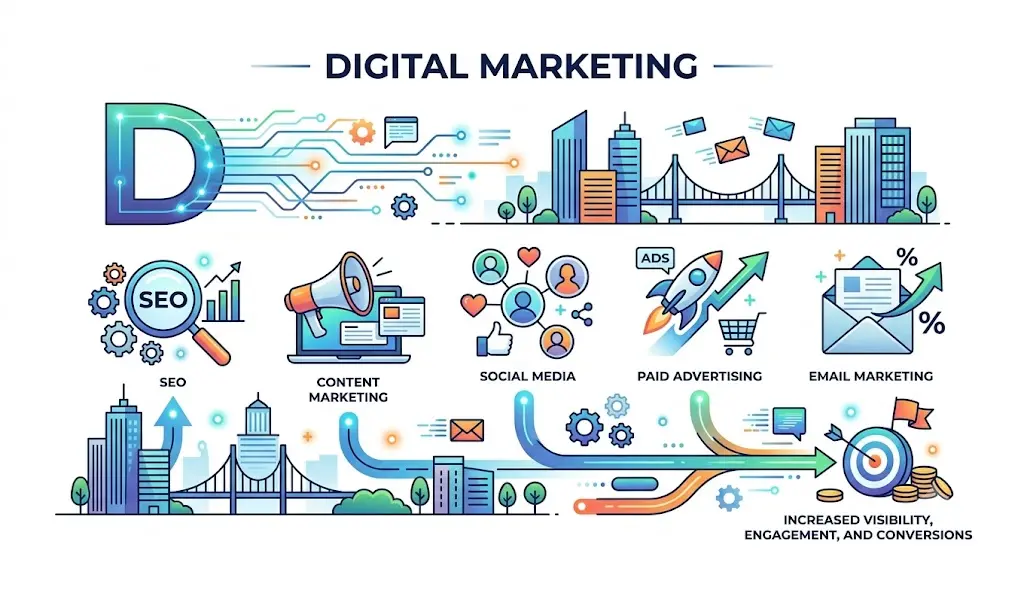
Digital marketing refers to all marketing activities conducted online. It involves promoting products, services, or brands through digital channels such as websites, search engines, social media platforms, email, and mobile applications. An AI Video Generator like Higgsfield can help marketers create engaging video content for their digital campaigns. To simplify and present these concepts in an engaging way, you can use an AI Instagram post generator to turn informative content into eye-catching posts that connect with your audience.
Over time, digital marketing has evolved into a collection of powerful strategies, including search engine optimization (SEO), content marketing, social media marketing, paid advertising, and more, all working together to increase visibility, engagement, and conversions.
A Simple Example
Imagine you own a small bakery. By posting photos of your latest creations on social media, engaging with customers through comments, and optimizing your website for local searches like “best bakery near me,” you can attract nearby customers without relying on traditional advertising. This is digital marketing in action, targeted, measurable, and effective.
Key Components of Digital Marketing
The scope of digital marketing goes far beyond a single channel. One of its greatest strengths is customisation strategies can be tailored to businesses of any size or industry.
1. Search Engine Optimization (SEO)
SEO focuses on improving a website’s visibility in search engine results. By optimizing content, site structure, and backlinks, businesses can attract organic traffic without paying for every click.
2. Content Marketing
Content marketing involves creating valuable and relevant content blogs, videos, infographics, and guides to attract and retain audiences. It builds trust, authority, and long-term engagement while supporting SEO and social media strategies.
3. Social Media Marketing
Social media marketing allows brands to connect directly with their audience. Through consistent posting, storytelling, and engagement, businesses can build communities, increase awareness, and drive leads. For businesses looking to strengthen direct outreach, Cold calling services can complement these digital efforts and help generate qualified leads. For example, AI reel makers help brands create attractive Instagram reels quickly, using simple prompts or product images, making content creation faster and more consistent.
4. Pay-Per-Click (PPC) Advertising
PPC advertising enables businesses to pay only when someone clicks on their ad. These campaigns are highly targeted, with tools like Cruva helping marketers reach specific audiences based on location, interests, and behavior.
5. Email Marketing
Email marketing remains one of the most effective digital channels. With the integration of AI Call Assistant technology, personalized and well-timed emails help nurture leads, increase customer loyalty, and drive repeat sales.
6. Affiliate Marketing
Affiliate marketing expands reach by partnering with individuals or businesses that promote products in exchange for a commission. It’s performance-based and cost-effective.
7. Influencer Marketing
Influencer marketing leverages trusted voices within niche communities. Authentic recommendations often outperform traditional advertising by building credibility and trust.
8. Online Public Relations (PR)
Online PR focuses on managing brand reputation across digital platforms, reviews, blogs, online publications, and social conversations, all of which influence consumer perception.
Digital marketing offers powerful advantages that traditional marketing methods simply cannot match. In an increasingly online world, these benefits make digital marketing essential for business growth and long-term success.
Benefits of Digital Marketing
1. Wide Reach
Digital marketing enables businesses to reach audiences across cities, countries, and even continents. Unlike traditional marketing, which is limited by geography, online platforms allow brands to connect with global customers 24/7.
2. Cost Efficiency
One of the biggest advantages of digital marketing is affordability. Businesses can run highly effective campaigns with flexible budgets. Even small businesses can compete with larger brands by investing in smart, data-driven strategies without spending heavily.
3. Measurable Results
Digital marketing provides real-time data and performance insights. Metrics such as clicks, impressions, engagement, and conversions can be tracked instantly, allowing marketers to evaluate success and make informed decisions.
4. Targeted Campaigns
With digital marketing, businesses can target specific audiences based on age, location, interests, behavior, and online activity. This ensures marketing messages reach the people most likely to convert, improving efficiency and ROI.
5. Interactive Engagement
Digital platforms allow two-way communication between brands and customers. Through social media comments, emails, chats, and reviews, businesses can engage directly with their audience, building stronger relationships and trust.
6. Flexibility and Adaptability
Digital marketing campaigns can be modified instantly. If a strategy isn’t performing well, marketers can change ads, content, targeting, or budgets in real time, something traditional marketing cannot offer.
The Importance of Data in Digital Marketing
Data plays a vital role in digital marketing because it helps businesses understand their audience, improve strategies, and achieve better results. By analyzing data such as website traffic, customer behavior, search trends, and social media engagement, marketers can identify what users like, need, and expect.
This information allows companies to create personalized campaigns, target the right audience, and deliver relevant content at the right time. Data also helps in measuring performance through metrics like conversion rates, click-through rates, and return on investment (ROI), making it easier to optimize campaigns.
Overall, data-driven digital marketing reduces guesswork, increases efficiency, and enables businesses to make smarter decisions that lead to higher growth and customer satisfaction.
Why Digital Marketing Matters for Businesses of All Sizes
The marketing field was controlled for a long time by traditional marketing methods like TV advertisements, print ads, and billboards. Even if these strategies are still useful, digital marketing has given small and medium-sized organizations lots of new options.
- Affordability: The affordability of digital marketing is one of its biggest benefits. Without a huge marketing budget, small businesses can compete with larger ones by putting smart, focused digital strategies into practice.
- Targeted Marketing: Digital marketing enables companies to target specific groups of people based on their interests, activities, and demographics. This level of specificity ensures that your marketing efforts are reaching the people who are most likely to become your customers.
- Measurable Results: Digital marketing yields unique, quantifiable outcomes in contrast to traditional marketing, which makes it difficult to determine the exact result of your efforts. With the use of analytics tools, you can track your advancement, evaluate your success, and modify your strategies as needed.
- Global Reach: A small business can use digital marketing to reach a global audience. You can advertise your goods and services to people all over the world due to the internet, which removes geographic limitations.
AI in digital marketing
Artificial intelligence (AI) in digital marketing refers to the use of intelligent computer systems that help companies in promoting their goods and services online. With AI’s speedy analysis of huge amounts of data, marketers can better understand the patterns, preferences, and behaviours of their target audience. This makes it possible for companies to target the correct demographic, produce content that is customized, and improve customer service. Today, tools like a Social Media Post Generator and an AI video production company can help businesses consistently create engaging content across platforms.
Marketers may save time and effort by using AI solutions to automate routine tasks like sending emails, posting on social media, and running online advertisements. Businesses can use AI-powered predictive analytics to predict future trends and modify their strategies accordingly. AI-powered chatbots are also capable of real-time interaction with customers, offering quick help and responses.
Overall, with automation and analytics, artificial intelligence (AI) helps marketers in decision-making, efficiency, and result improvements. It’s an effective tool that is changing how companies handle digital marketing.
The Human Element in Digital Marketing
While artificial intelligence and automation continue to grow in digital marketing, human interaction remains irreplaceable. Successful marketing campaigns are still built on understanding customer needs, creating genuine connections, and delivering real value.
For instance, when a customer leaves a negative review online, the way a brand responds can significantly impact its reputation. A thoughtful and empathetic response not only helps rebuild trust with that customer but also shows others that the brand truly cares. It reflects the presence of real people behind the business, focused on customer satisfaction.
Although technology can streamline processes and improve efficiency, authenticity and personal connection remain key factors in building long-term relationships and brand loyalty.
The Future of Digital Marketing

Digital marketing has a dynamic and evolving future. The industry will continue to grow due to rapid technological advancements, changing customer behavior, and shifting market demands. Several emerging trends are shaping the future of digital marketing:
Voice Search Optimization:
With the increasing use of voice assistants such as Alexa, Siri, and Google Assistant, voice search optimization is becoming essential. Businesses are now focusing on creating more conversational content and optimizing for longer, natural language search queries.
Video Marketing:
Research shows that audiences find video content more engaging than text or static images. Platforms like Instagram Reels, TikTok, and YouTube are already leveraging the power of video to capture attention, boost engagement, and improve brand visibility.
AI and Automation:
Businesses are increasingly adopting AI-driven marketing tools to automate customer support, personalize content, and analyze customer behavior.
For content specifically, AI autoblogging tools have shown significant ROI advantages over manual content creation for growing businesses. AI helps improve efficiency while enabling more data-driven marketing decisions.
Interactive Content:
Interactive content such as polls, quizzes, and interactive posts is gaining popularity. This type of content encourages deeper engagement, keeps users on websites longer, and helps improve conversion rates and SEO performance. It also provides valuable user behaviour insights that can support more accurate SEO reporting and content optimization strategies.
Augmented Reality (AR) and Virtual Reality (VR):
AR and VR are emerging as powerful digital marketing tools. For instance, AR allows customers to virtually try products before purchasing, enhancing the online shopping experience and reducing buying hesitation.
As these and other innovations continue to develop, the scope of digital marketing will keep expanding. Businesses that adopt these trends early will gain a strong competitive advantage in the digital marketplace.
The Endless Opportunities of Digital Marketing
The scope of digital marketing offers endless opportunities for businesses of all sizes in today’s fast-paced digital environment. From content marketing and social media to SEO and paid advertising, every element plays a vital role in helping businesses reach their target audience and achieve their objectives.
Although challenges such as content saturation, data privacy concerns, and rapidly changing trends exist, the potential benefits are substantial. By effectively using data, staying updated with industry trends, and maintaining a human-centered approach, businesses can succeed in the highly competitive online landscape.
Additionally, digital marketing courses create strong career opportunities by equipping individuals with in-demand skills such as SEO, content creation, social media management, and data analytics. These skills enable professionals to adapt to the evolving digital world, making them valuable assets in today’s job market.
Advanced Digital Marketing Trends Every Learner Should Know
Staying competitive in today’s digital landscape requires continuously upgrading skills with the latest tools and strategies. Whether you are a student, marketing professional, or business owner, understanding advanced digital marketing trends is essential.
These trends not only transform how brands connect with consumers but also redefine the skills required for success in modern marketing.
1. The Rise of Artificial Intelligence (AI) in Marketing
Artificial Intelligence has evolved from a trending concept into a core component of digital marketing strategies. Today, AI supports content creation, audience segmentation, predictive analytics, and campaign automation.
Key AI-Driven Marketing Applications:
- Hyper-Personalization:
- AI analyzes user behavior to deliver highly personalized content, improving engagement and conversion rates. AI-powered email personalization has been shown to increase open rates by up to 41%.
- Predictive Analytics:
Platforms such as Salesforce and Adobe Sensei leverage AI to forecast customer behavior, allowing marketers to target audiences with timely and relevant offers. - AI-Powered Chatbots:
Chatbots provide 24/7 customer support, handle routine queries, and assist with lead generation. According to Gartner, by 2025, 85% of customer interactions will occur without human involvement.
A 2025 report by the Digital Marketing Institute revealed that 92% of companies are investing in AI tools, highlighting AI’s growing influence on marketing strategies.
2. Voice Search and Conversational Interfaces
Voice search is rapidly gaining popularity due to the widespread use of smart devices like Alexa, Siri, and Google Assistant. As a result, optimizing content for natural and conversational queries has become essential.
Why It Matters:
- Voice searches are longer and more conversational, requiring changes in keyword strategies.
- Local SEO benefits greatly, with “near me” searches increasing by 300% in recent years.
- Gartner predicts that 25% of traditional search traffic will shift to voice and AI-based platforms by 2026.
To remain competitive, marketers must focus on schema markup, FAQs, and long-tail keywords.
3. The Dominance of Video Marketing
Video has emerged as the most engaging form of digital content. With the growth of platforms like YouTube Shorts and Instagram Reels, short-form video content continues to expand rapidly. Tools like invideo agent can help marketers create videos with AI, making it easier to produce engaging content and maintain a consistent presence across different platforms.
Key Insights:
- 73% of consumers prefer short videos when learning about products (HubSpot, 2025).
- Businesses using video marketing experience 49% faster revenue growth than those that do not.
- Live streaming and interactive videos are gaining popularity, improving engagement and trust.
Marketing courses should emphasize video creation, editing tools like CapCut or Canva Video, and video SEO strategies.
4. Influencer Marketing Evolution
Influencer marketing is shifting away from celebrity endorsements toward micro and nano influencers who have stronger engagement within niche audiences.
Current Trends:
- The influencer marketing industry is expected to reach $32.5 billion by 2025, up from $21 billion in 2023.
- Brands are prioritizing long-term influencer partnerships over single campaigns.
- Authenticity, trust, and relevance now play a key role in influencer collaborations.
Dedicated training in influencer outreach, campaign planning, and ROI measurement is becoming increasingly important.
5. Data Privacy and Ethical Marketing
Consumers are more aware than ever of how their data is collected and used. Regulations such as GDPR, CCPA, and India’s Digital Personal Data Protection Act require marketers to prioritize data privacy and compliance.
Best Practices Include:
- Transparent data collection through consent banners and cookie policies
- Ethical data usage and privacy-focused personalization
- Building trust using secure platforms and opt-in marketing strategies
Educating marketers on data privacy helps avoid legal risks while strengthening consumer trust.
6. Augmented Reality (AR) and Virtual Reality (VR)
AR and VR technologies are creating immersive digital experiences that enhance customer engagement and decision-making.
Use Cases:
- Furniture brands use AR to help customers visualize products in their homes
- Beauty brands offer virtual makeup trials using AR
- Real estate companies provide VR-based property tours.
Conclusion
Digital marketing has become essential for businesses in today’s digital world. Its wide scope, including SEO, content marketing, social media, data analytics, and AI helps organizations reach the right audience and achieve measurable results.
Data-driven strategies and artificial intelligence improve efficiency, personalization, and decision-making, while human creativity and authenticity remain key to building trust and strong customer relationships. Despite challenges like data privacy and rapid changes, digital marketing offers significant growth and career opportunities.
In conclusion, businesses and professionals who adapt, continue learning, and balance technology with human connection will succeed in the evolving digital landscape.