
The advantages of HTML make it the core technology behind every website. HTML (HyperText Markup Language) is a simple and lightweight language used to structure web pages and organize content effectively.
One of the main advantages of HTML is its ease of use, making it ideal for beginners and professionals alike. It is supported by all browsers and works smoothly across devices while keeping pages fast-loading.
HTML is also SEO-friendly, as it supports headings, semantic tags, and meta elements that help search engines understand and rank content better. It integrates easily with CSS and JavaScript, allowing styling, responsiveness, and interactivity.
Overall, the advantages of HTML include speed, accessibility, flexibility, and universal compatibility, making it essential for modern web development.
Easy to Learn and Use
One of the biggest advantages of HTML is its simple and readable syntax, which makes it ideal for beginners. HTML uses clear tags like headings, paragraphs, and images that are easy to understand, even for someone with no prior coding experience.
With just a few basic tags, you can create the structure of a web page, such as adding text, links, and images. This simplicity allows learners to see results quickly, build confidence, and start developing web pages without complex tools or programming knowledge.
Universal Browser Compatibility
One of the major advantages of HTML is that it is supported by all modern web browsers such as Chrome, Firefox, Safari, and Edge. This means web pages created using HTML display correctly without needing extra plugins or adjustments.
Because HTML works consistently across different browsers, devices, and operating systems, users get a uniform viewing experience whether they are accessing a website on a desktop, tablet, or mobile phone.
Lightweight and Fast Loading
HTML files are text-based and require very little storage space, which makes them lightweight. As a result, web pages built with HTML load faster compared to heavier technologies.
Faster loading speeds improve user experience, reduce bounce rates, and are especially helpful for users on slow internet connections or mobile networks.
SEO-Friendly Structure
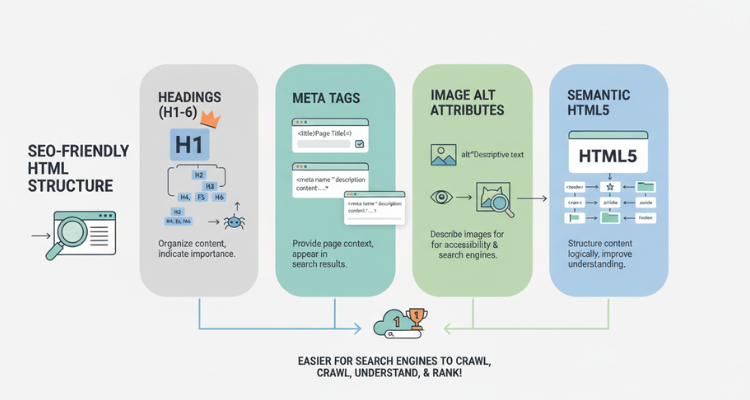
One of the major advantages of HTML is its SEO-friendly structure. HTML allows developers to use headings (<h1> to <h6>), meta tags, alt attributes for images, and semantic elements such as <header>, <section>, <article>, and <footer>. These elements clearly define the structure and meaning of the content on a web page.
Search engines rely on this structure to understand what a page is about. When HTML is properly organized, search engine crawlers can easily index the content, identify important sections, and rank the page more accurately. This improves visibility in search results and enhances overall SEO performance.
Free and Open Standard
HTML is a free and open standard maintained by the World Wide Web Consortium (W3C). Anyone can use HTML without paying licensing fees or purchasing specialized software, making it accessible to individuals, startups, and large organizations alike.
You can create HTML files using simple text editors like Notepad or more advanced tools like Visual Studio Code. This flexibility reduces development costs and allows developers to build websites without financial or technical barriers.
Integrates Seamlessly with CSS & JavaScript
HTML serves as the core structure of a website, while CSS controls its layout and design, and JavaScript adds interactivity and dynamic functionality. HTML defines elements like text, images, and forms, which CSS styles and JavaScript enhances.
This seamless integration allows developers to create responsive designs, animations, and interactive features such as forms, sliders, and real-time updates. Together, HTML, CSS, and JavaScript form the foundation of modern web development.
Supports Multimedia Content
HTML provides built-in support for multimedia elements such as images, audio, and video through dedicated tags. These tags allow developers to embed media content directly into web pages without relying on third-party plugins.
Native multimedia support improves website performance, security, and compatibility across devices and browsers. It also enhances user engagement by allowing rich content like videos and audio to load smoothly and efficiently.
Templates & Reusable Code Availability
One of the practical advantages of HTML is the availability of a wide range of free templates and reusable code. These templates help developers build websites faster by providing ready-made page structures and layouts.
For beginners, HTML templates act as learning tools by showing how different elements are organized on a page. By studying and modifying templates, new developers can quickly understand page structure, best practices, and layout design without starting from scratch.
Platform & Device Flexibility
HTML works seamlessly across multiple platforms and devices, including desktops, laptops, tablets, and mobile phones. Web pages built with HTML display consistently without requiring device-specific modifications.
When combined with CSS, HTML makes responsive web design easier. This allows websites to automatically adjust layouts, images, and content for different screen sizes, ensuring a smooth user experience on all devices.
Broad Community and Documentation
HTML has a massive global community of developers, designers, and learners. This results in extensive documentation, tutorials, guides, and forums available online for every skill level.
Because of this large community, finding solutions to problems is fast and easy. Whether you are a beginner or an experienced developer, help is always available through articles, videos, and developer forums.
Accessibility and Semantic Markup
HTML supports semantic markup using elements such as <header>, <nav>, <article>, and <footer>, which clearly describe the purpose of content on a page. This improves readability for both users and search engines.
Semantic HTML also enhances accessibility by helping screen readers and assistive technologies interpret content correctly. This makes websites more inclusive and user-friendly for people with disabilities.
Frequently Asked Questions (FAQs)

1. What are the main advantages of HTML?
The main advantages of HTML include its simplicity, ease of learning, and universal browser compatibility. HTML is lightweight, loads fast, and provides an SEO-friendly structure that helps search engines understand and index content. It also integrates smoothly with CSS and JavaScript, supports multimedia content, and is free to use.
2. Why is HTML easy to learn for beginners?
HTML is easy to learn because it uses a simple, readable tag-based syntax. Beginners can quickly understand elements like headings, paragraphs, links, and images, and start creating basic web pages without prior programming knowledge or complex tools.
3. How does HTML help with SEO?
HTML improves SEO by supporting proper headings, meta tags, alt attributes, and semantic elements. These features help search engines crawl, understand, and rank web pages more accurately, increasing visibility in search results.
4. Is HTML supported by all web browsers?
Yes, HTML is supported by all major web browsers, including Chrome, Firefox, Safari, and Edge. This ensures consistent display and functionality across different devices and operating systems.
5. Why does HTML load faster than other technologies?
HTML files are text-based and lightweight, which means they require less data to load. Faster loading speeds improve user experience, reduce bounce rates, and perform well even on slower internet connections.
6. Is HTML free to use?
Yes, HTML is completely free and open-source. It does not require licensing fees or paid software, and developers can create HTML files using simple text editors or advanced code editors like VS Code.
7. How does HTML work with CSS and JavaScript?
HTML defines the structure of a web page, CSS controls the design and layout, and JavaScript adds interactivity. Together, they create responsive, visually appealing, and interactive websites.
8. Does HTML support multimedia content?
Yes, HTML supports multimedia elements such as images, audio, and video using built-in tags. This allows developers to embed rich media content without relying on external plugins.
9. What makes HTML suitable for responsive web design?
HTML works across all devices and platforms, and when combined with CSS, it allows content to adapt automatically to different screen sizes. This makes responsive web design easier and more efficient.
10. How does HTML improve website accessibility?
HTML uses semantic tags that help screen readers and assistive technologies understand content structure. This improves accessibility for users with disabilities and ensures a more inclusive web experience.
11. Are HTML templates useful for beginners?
Yes, HTML templates help beginners understand page layouts and structure quickly. They speed up development and allow learners to modify existing code rather than starting from scratch.
12. Why is HTML still important in modern web development?
HTML remains essential because it is the foundation of all websites. No matter which framework or technology is used, HTML is required to structure content, ensure accessibility, and maintain browser compatibility.
13. Are there any disadvantages of HTML?
While the advantages of HTML are significant, HTML itself is a markup language and cannot create dynamic or interactive functionality on its own. It depends on CSS for styling and JavaScript for interactivity. However, when used together with these technologies, HTML remains highly effective and essential for modern web development.
Conclusion
The advantages of HTML make it an essential technology for modern web development. Its simplicity, fast loading speed, universal browser compatibility, SEO-friendly structure, and seamless integration with CSS and JavaScript allow developers to create efficient, responsive, and accessible websites. With support for multimedia content, reusable templates, and strong community resources, HTML remains reliable and future-ready.
Mastering HTML is a core skill for anyone entering web development. Whether you are a beginner or a professional, understanding HTML provides a strong foundation to build, optimize, and scale successful websites with confidence.