If you want to become a data scientist after 12th, the most important step is choosing the right subjects or degree. This decision builds your foundation in mathematics, programming, and logical thinking—everything else comes later.
- Students from Science with Mathematics (PCM/PCMB) get the strongest and easiest start.
- Commerce with Mathematics is also a good option for students comfortable with numbers and data analysis.
- Students from Arts or other streams can enter data science too, but they must learn mathematics and coding from the basics.
In India, the most useful degrees for this career path are:
- B.Tech / B.E. in Computer Science, IT, AI, or Data Science
- B.Sc in Data Science, Statistics, Mathematics, or Computer Science
- BCA (Bachelor of Computer Applications)
Once the degree path is clear, you can then focus on learning tools like Python, Excel, SQL, and statistics, practice with small projects, and gradually move toward entry-level data roles. This guide explains which degree to choose, why it matters, and what to do next, so you can plan your data science journey after 12th with clarity and confidence.
What Is Data Science in Simple Words?
Data science is about working with data to find useful information. A data scientist studies data, finds patterns, and helps companies make better decisions. For example, data scientists help Netflix recommend movies and help online stores suggest products you may like.
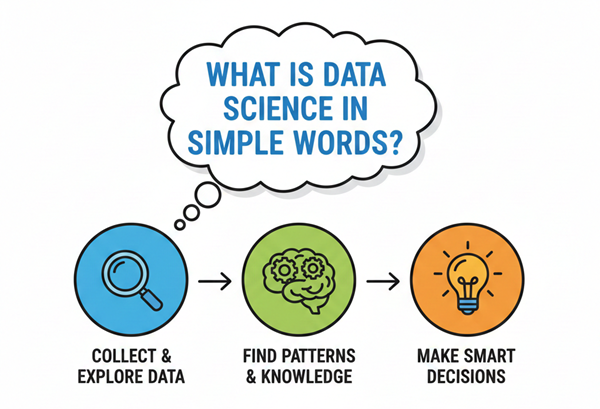
They work with large amounts of data collected from websites, apps, and customer activity. By analyzing this data, they can predict trends, understand user behavior, and solve real-world problems.
Data scientists use tools like Python, Excel, and charts to turn raw data into easy-to-understand insights. Their work helps businesses improve services, increase sales, and provide a better experience to users.
Can You Become a Data Scientist After 12th?
Yes, you absolutely can. You don’t need to be an expert right away or have advanced technical knowledge at the start. What matters most is choosing the right learning path and staying consistent.
With basic math skills, logical thinking, and interest in technology, you can gradually build the skills needed for data science.
Many successful data scientists started learning from scratch after 12th by taking beginner courses, practicing regularly, and working on small projects. If you are patient and willing to learn step by step, data science can be a strong and achievable career option for you.
Online Courses for Beginners
1. Python for Beginners:
Python for Beginners is perfect for those with no prior coding experience who want to start from scratch. It introduces core Python concepts like syntax, variables, data types, loops, and functions in a simple way.
You’ll also learn to work with data structures and basic libraries such as NumPy and Pandas. Regular practice through small exercises helps build confidence and strong coding fundamentals.
For Example:
Codecademy “Python Programming – Beginner to Advanced” (Interactive Learning Platform)
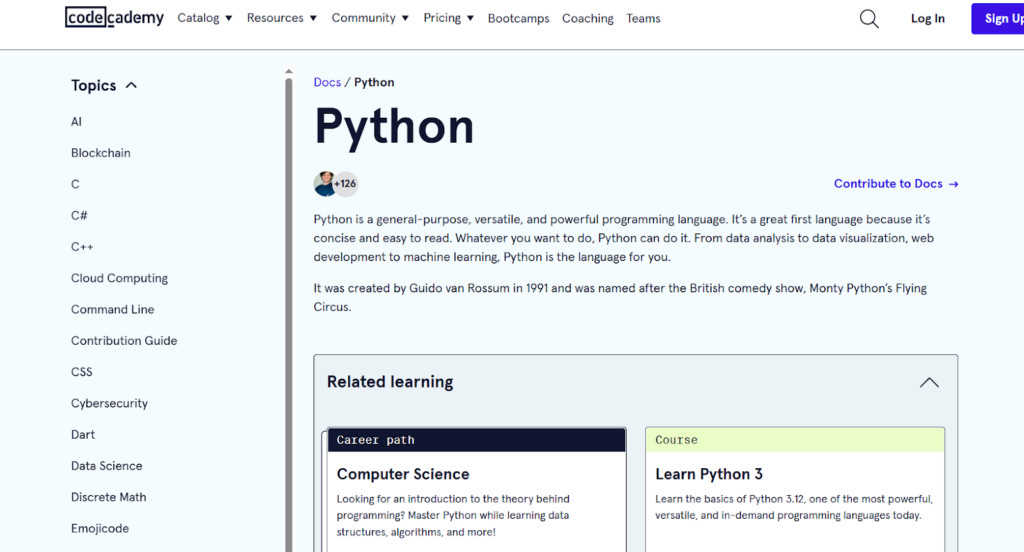
Codecademy offers comprehensive resources and structured learning for Python, one of the most versatile and beginner-friendly programming languages. Python on Codecademy covers core programming fundamentals like syntax, control flow, data types, functions, lists, loops, and dictionaries while also including guided lessons on real coding concepts used in data analysis and software development.
The platform’s Python content is supported by interactive lessons, hands-on practice, and real coding exercises that let learners write and execute code directly in the browser, helping reinforce concepts with real feedback.
You can start with the beginner-friendly Learn Python 3 course that includes multiple projects and quizzes, or explore additional topics ranging from basic syntax to file handling and advanced Python modules. Codecademy’s structured docs and course paths make it easy to progress from absolute beginner to confident coder at your own pace.
2. Introduction to Data Science:
Introduction to Data Science gives beginners a clear understanding of what data science is and how it works in real-world applications. The course covers data collection, cleaning, preprocessing, exploratory data analysis, and basic statistics.
It also introduces machine learning concepts to explain the complete data science workflow. This course is ideal for learners who want strong conceptual clarity before focusing on coding.
For Example
Coursera “Data Scientist Career Academy” (Industry-Aligned Learning Path)
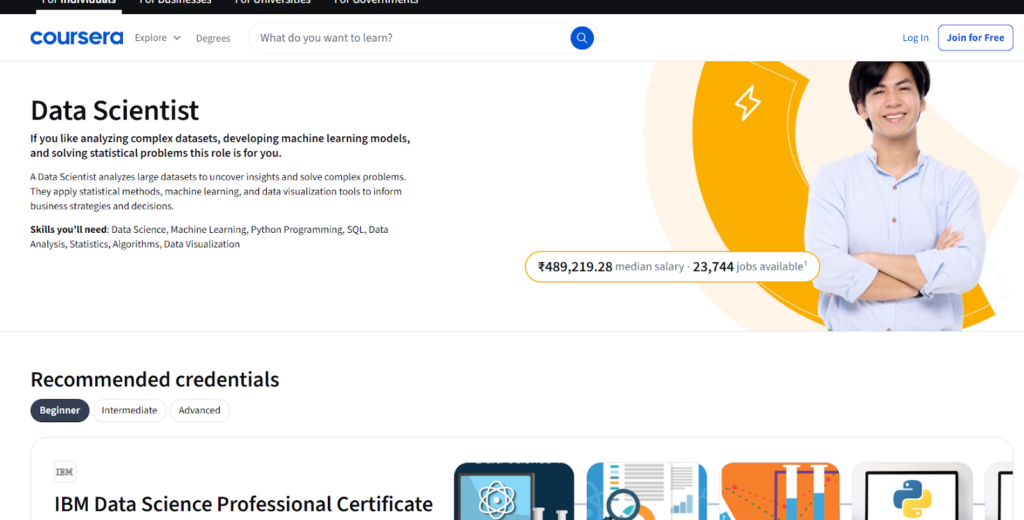
Coursera’s Data Scientist Career Academy offers a structured, job-focused learning path designed to prepare learners for real-world data science roles. The program covers in-demand skills such as Python programming, statistics, data analysis, machine learning, SQL, and data visualization through courses created by top universities and leading companies. Learners gain hands-on experience with practical projects, guided labs, and real datasets that reflect industry use cases.
Ideal for: Beginners to early-career professionals who want a clear, career-oriented roadmap to become a data scientist, build a strong portfolio, and develop job-ready skills recognized by employers.
3. Google Data Analytics Certificate:
The Google Data Analytics Certificate is a beginner-friendly, career-oriented program recognized by employers. It focuses on practical skills such as spreadsheets, SQL, and data visualization using Google Data Studio.
The course uses real-world datasets and covers data ethics and best practices. Hands-on exercises help learners become job-ready for entry-level data analytics roles
For Example:
Alison “Google Analytics Courses” (Free Online Certification Programs)

Alison’s Google Analytics courses provide a beginner-friendly introduction to web analytics and data-driven decision-making. The programs cover essential topics such as Google Analytics fundamentals, tracking website traffic, understanding user behavior, interpreting reports, and measuring marketing performance.
Courses are self-paced, include assessments, and offer free learning with optional paid certificates.
Ideal for: Beginners, marketers, and analysts who want to learn Google Analytics basics and gain practical analytics skills without a high cost or long lecture formats.
4. IBM Data Science Beginner Courses:
IBM’s beginner data science courses offer a comprehensive introduction to data science, analytics, and coding. You will learn Python specifically for data science, work with data using Pandas, and create visualizations with Matplotlib and Seaborn.
The course also introduces basic concepts of machine learning and artificial intelligence. It is best for learners who want an all-in-one foundation in data science, and completing the hands-on labs and projects provided by IBM will help you build a strong portfolio.
For Example:
Career247 “Data Analytics Job-Assisted Program” (Industry-Focused Training)
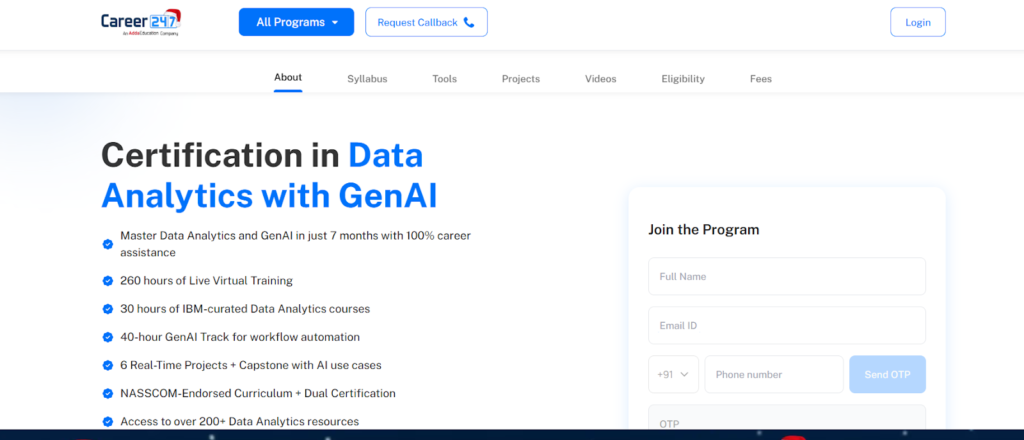
Career247’s Data Analytics Job-Assisted Program is designed to prepare learners for real-world analytics roles with a strong focus on practical skills and employability. The program covers core tools such as Excel, SQL, Python, data visualization, and business analytics through hands-on projects and real datasets. It also includes career support like resume building, interview preparation, and job assistance.
Ideal for: Beginners and career switchers who want structured training combined with placement support to enter the data analytics field quickly.
Which Stream Is Best After 12th?
Choosing the right stream after 12th can make your data science journey easier, but it does not limit your success.
- Science with Mathematics (PCM or PCMB) is considered the ideal choice because it builds strong problem-solving and analytical skills, which are important in data science. Students from this stream usually find it easier to understand programming, statistics, and machine learning concepts.
- Commerce with Mathematics is also a good option. If you are comfortable with numbers, data analysis, and logical thinking, you can easily learn data science skills with the help of online courses and practice. Many commerce students successfully move into data analytics and business intelligence roles.
- Arts stream can also become data scientists. However, they may need to put in extra effort to learn mathematics, statistics, and coding from the basics. With dedication, practice, and the right learning resources, students from any stream can succeed in data science.
Remember, you don’t need to be a math topper to enter this field. Understanding basic concepts and practicing regularly is more important than scoring high marks. Consistency and interest play a bigger role than your stream or background.
What Degree Should You Choose?
1. B.Tech / B.E. in Computer Science or IT
- Duration: 4 years
- Focus: Programming, software development, algorithms, database management, and IT systems.
- Relevance to Data Science: Strong foundation in coding, data structures, and computer systems. These are crucial for data science tasks like building machine learning models and handling big data.
- Career Opportunities: Software developer, data analyst, data engineer, machine learning engineer, AI specialist.
2. B.Sc in Data Science, Statistics, or Mathematics
- Duration: 3 years
- Focus:
- Data Science: Data analysis, machine learning, predictive modeling.
- Statistics: Probability, statistical modeling, hypothesis testing.
- Mathematics: Linear algebra, calculus, discrete math – important for algorithm development and analytics.
- Relevance to Data Science: Directly aligned with data analytics, predictive modeling, and AI.
- Career Opportunities: Data analyst, statistician, business analyst, machine learning engineer.
3. BCA (Bachelor of Computer Applications)
- Duration: 3 years
- Focus: Programming, database management, software applications, web development.
- Relevance to Data Science: Provides practical knowledge of coding and software, which is helpful when working with data pipelines or integrating data science solutions into applications.
- Career Opportunities: Software developer, junior data analyst, IT consultant, application developer.
Skills You Should Learn as a Beginner
1. Basic Statistics: Statistics is the foundation of data science, as it helps you understand and analyze data meaningfully. Beginners should learn measures of central tendency such as mean, median, and mode, along with measures of spread like variance and standard deviation.
You should also understand probability basics, data distributions, and simple hypothesis testing. Practicing these concepts on small datasets like student marks or sales data will help you identify trends and patterns.
2. Excel: Excel is an essential tool for data cleaning, organization, and basic analysis, and it is widely used in many companies. Key skills include using formulas like SUM, AVERAGE, IF, and VLOOKUP, sorting and filtering data, creating pivot tables, and designing charts. Conditional formatting helps highlight important insights quickly. You can practice Excel by analyzing small datasets, creating summaries, and visualizing trends using charts.
3. SQL (Structured Query Language): SQL is used to store, retrieve, and manage data in databases, making it a must-have skill for data analysts and data scientists. As a beginner, you should learn core commands such as SELECT, WHERE, ORDER BY, and GROUP BY, along with JOINs to combine multiple tables. Understanding aggregations like SUM, COUNT, and AVG and basic database design concepts is also important. You can practice SQL using free online platforms and querying sample databases to answer business-related questions.
4.Data Visualization: Data visualization helps you communicate insights clearly and effectively, which is crucial for presentations and decision-making. Beginners can start with tools like Power BI for drag-and-drop dashboards, Tableau for interactive visualizations, and Matplotlib or Seaborn in Python for custom analysis.
You should understand basic charts such as bar, line, scatter, and pie charts, as well as dashboards and data storytelling. Practice by creating two or three charts from a dataset that clearly explain data trends.
5. Python Programming: Python is the most popular language in data science because it is easy to learn and has powerful libraries. As a beginner, you should focus on basics like variables, data types, loops, conditional statements, functions, and modules.
Learning libraries such as Pandas for data handling, NumPy for numerical operations, and Matplotlib or Seaborn for visualization will help you work with real data. You can practice Python by doing small projects like analyzing a dataset or building a simple calculator.
Practice With Small Projects
1. Why Small Projects Matter: Working on small projects is one of the best ways to truly understand data science concepts. Hands-on practice helps you apply theory to real situations, builds confidence in using tools like Python, Excel, and SQL, and makes learning more practical and memorable.
Small projects also help you create a portfolio that you can show to employers or use while applying for internships, proving that you can work with real data and solve problems.
2. Analyzing Student Marks: This project helps you learn how to analyze and summarize data effectively. Using Python with Pandas, Excel, basic statistics, and a quick rsd calculator for spot-checking variability, you can calculate averages, medians, and modes of student scores, identify the highest and lowest scorers, and visualize score distributions using bar charts or histograms.
By analyzing the data, you can also identify trends, such as which subjects are most challenging for students.
3. Monthly Expense Analysis: A monthly expense analysis project introduces you to real-world data and basic budgeting concepts. Using Excel, Python, and simple data visualization techniques, you can categorize expenses such as food, transport, and entertainment, calculate total and average spending, and analyze monthly trends.
Visualizing the data with pie charts, line graphs, or bar charts helps you identify patterns, like which month had the highest expenses.
4.Simple Data Charts and Reports: This project focuses on presenting data insights clearly and effectively. Using tools like Excel, Tableau, Power BI, or Python libraries such as Matplotlib and Seaborn, you can create different types of charts for any dataset and generate summary reports with key insights. Combining multiple charts into a simple dashboard helps you practice data storytelling by clearly explaining what the numbers mean and why they matter.
First Jobs You Can Apply For
1.Data Analyst Intern: This role is ideal for students or freshers who have basic knowledge of Python, Excel, SQL, or data visualization tools. As a data analyst intern, you will work with data collected from different sources, clean and organize it, and perform simple analyses to identify trends and insights.
You will also create charts, dashboards, and reports while supporting senior data analysts and data scientists in their work. This role helps you gain practical skills in data cleaning, reporting, and using tools like Excel, SQL, and Python. It is best to treat this position as a learning opportunity by asking questions and taking initiative on small projects.
2. Junior Data Analyst:
A junior data analyst role is suitable for fresh graduates who have some experience handling data or have completed small projects. In this position, you will analyze both structured and unstructured data, prepare reports and presentations for stakeholders, and use tools such as Excel, SQL, Python, Power BI, or Tableau to visualize insights.
You may also assist with basic predictive analytics tasks. This role helps you develop analytical thinking, data visualization skills, business understanding, and stronger SQL and Python fundamentals. Accuracy and clarity in reports are especially important in this position.
3. Business Analyst Intern: This role is a good fit for beginners who are interested in data-driven decision-making from a business perspective. As a business analyst intern, you will work on understanding business requirements and translating them into meaningful data questions. You will help create reports, dashboards, and key performance indicators (KPIs), and analyze data to suggest improvements or solutions.
This role builds strong skills in business understanding, communication, reporting, and problem-solving, and it strengthens your ability to combine technical knowledge with business insights, which is essential for a future career in data science..
Is Higher Education Required?
Do You Need Higher Education?:
Higher education is not mandatory to build a career in data science. Many professionals enter the field with a bachelor’s degree, strong practical skills, and hands-on experience. Employers often value real-world projects, internships, and problem-solving ability more than academic qualifications alone.
However, higher education can be beneficial if you are aiming for specialized roles such as AI researcher, data scientist in top companies, or management positions, as a master’s degree or MBA can provide deeper knowledge and a competitive edge.
1. M.Sc in Data Science: An M.Sc in Data Science is a two-year program focused on advanced statistics, machine learning, data modeling, and big data analytics. It is ideal for individuals who want deep technical expertise and aim to become data scientists, machine learning engineers, or AI specialists.
This degree offers a strong foundation in analytics, access to research opportunities, and better prospects for technical roles, though it requires a significant investment of time and money.
2. M.Tech in AI or Analytics: The M.Tech in AI or Analytics is a two-year program designed for engineering graduates who want advanced technical knowledge in artificial intelligence, machine learning, predictive modeling, and optimization techniques.
It prepares students for high-demand roles in AI and ML with competitive salary opportunities. However, this path requires a strong technical background and is more suitable for those comfortable with complex engineering and mathematical concepts.
3. MBA in Business Analytics: An MBA in Business Analytics typically lasts two years, with some accelerated one-year programs available. It focuses on business strategy, data-driven decision-making, predictive analytics, and dashboard creation for business insights.
This program is best suited for individuals interested in managerial or strategic roles such as Analytics Manager, Business Analyst, or Product Manager. It combines business and analytics skills and opens doors to leadership positions, although it offers less technical depth compared to M.Sc or M.Tech programs.
Final Words
Becoming a data scientist after 12th is possible for beginners if you take the right steps and stay consistent. Start learning early, practice regularly, and don’t rush the process. With time and effort, you can build a strong and successful career in data science.